Baking Science
Every rise is air, steam or carbon dioxide, and most bakes use all three
Sorting leavening into three physical gases rather than into ingredients explains why one bake needs beating and another needs a hot oven.

This looks at the three leavening gases from the practical end — what holds up once conditions stop being ideal.
What holds up in practice
- Air must be beaten in before baking, since none appears later.
- Steam only forms once the bake is hot enough.
- Carbon dioxide comes from yeast or from chemical raising agents.
Air, and why it has to arrive early
No bake produces air, so every bubble of it was put there mechanically before the mixture went into the oven. Creaming, whisking eggs, rubbing fat into flour and sifting all introduce air in different quantities. Those bubbles expand as they warm, which is a large part of the lift in a sponge or a meringue-based cake.
They also act as sites where other gases collect, since carbon dioxide and steam migrate into existing bubbles rather than making new ones. This is why a batter that was never aerated bakes flat even when it contains plenty of raising agent.
Steam, the gas that arrives late
Water in a batter or dough turns to steam once the mixture is hot enough, expanding enormously as it does. Because that happens well into the bake, steam lifts structures that are already partly set.
Choux, puff pastry and popover-style batters rely almost entirely on steam, which is why they need a hot start. Steam also explains why a wet batter can rise more than a dry one containing the same raising agent. Losing steam early, through an opened door or a vented crust, removes lift that cannot be recovered.
Carbon dioxide from fermentation
Yeast converts sugars into carbon dioxide and alcohol, producing gas slowly over hours rather than minutes. That slow production suits doughs, where a gluten network has time to stretch around the growing bubbles. It also produces flavour compounds, which is the reason yeast is used where a chemical raising agent would be faster.
Fermentation continues into the early part of the bake until heat kills the yeast, contributing to oven spring. The gas does not create new bubbles, it inflates ones already present from mixing.
Carbon dioxide from chemistry
Bicarbonate of soda releases carbon dioxide on contact with acid and moisture, which happens quickly. Baking powder packages bicarbonate with its own acid, and most modern versions release gas in two stages. The first release happens on mixing, and the second when the batter heats, which spreads the lift across the bake.
The dough tells you first: because the reaction is fast, batters raised this way are usually baked promptly rather than left to stand.
Excess raising agent gives large, coarse bubbles that merge and collapse rather than a finer, stronger rise.
How the three combine
A creamed cake uses air from creaming, carbon dioxide from baking powder and steam from its liquid, in that order of arrival. A loaf of bread uses air from mixing, carbon dioxide from fermentation and steam during oven spring.
Weighed out, puff pastry uses steam almost exclusively, with a small contribution from air trapped between layers. A whisked sponge uses air overwhelmingly, with steam assisting and no chemical raising agent at all. Identifying which gases a recipe depends on tells you immediately which steps cannot be rushed.
Proving times are written for a warm kitchen, and yours may not be one.
What limits the rise
Whatever gas is produced, the structure has to be strong enough to hold it and extensible enough to stretch. Gas escaping through a torn or weak structure produces no lift, which is why development matters as much as leavening. Setting is a race, since a structure that sets too early traps a small volume and one that sets too late collapses.
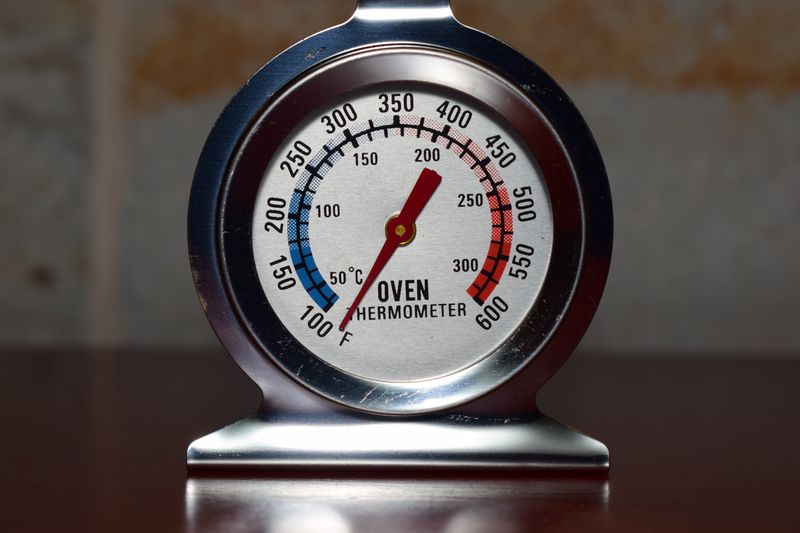
Heat drives both expansion and setting, which is why oven temperature changes the final volume so noticeably. More raising agent rarely fixes a poor rise, because the limit is almost always structural rather than chemical.
The takeaway
Work out which gas is doing the lifting, and the awkward instructions in the recipe stop looking arbitrary.
Patience is an ingredient, and it is the one people leave out.
Questions readers ask
Can I add baking powder to bread dough for a bigger loaf?
It adds gas but not structure, and the dough usually cannot hold the extra, so the crumb becomes coarse. Better fermentation and better gluten development do far more.
Why do some recipes say to bake immediately?
Because chemical raising agents begin releasing gas as soon as they are wet, and a batter left standing loses some of it. Doughs raised by yeast have the opposite instruction for the opposite reason.