Bread
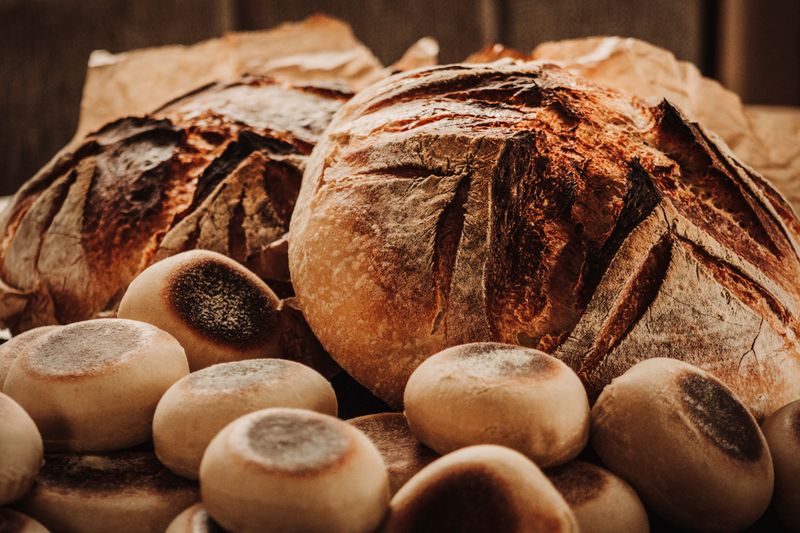
Bulk fermentation ends when the dough says so, not when the timer does
Almost every dense loaf and every collapsed one traces back to the same decision, made by a clock that knew nothing about your…
Editor, Bakemens
Moushumi edits Bakemens and has weighed every ingredient she has used since 2016.
Contact Moushumi through our contact page — mark your message for their attention and it will be passed on.
Bread
Almost every dense loaf and every collapsed one traces back to the same decision, made by a clock that knew nothing about your…
Bread
A dry oven sets the crust within four or five minutes and locks the loaf at whatever size it happened to be. Steam delays that by…
Bread
Once established, a starter is a competitive environment that keeps itself safe. Most of the anxiety around it comes from treating…
Pastry
Drying the paste on the hob before the eggs go in decides how much egg it can absorb, and that decides how high the buns rise.
Pastry
Boiling water, melted fat and warm handling would ruin a tart case. Here they produce a pastry strong enough to stand up on its own…
Pastry
Pâte sucrée tears, cracks and crumbles during handling, and every one of those behaviours is a direct consequence of what makes it…
Baking Science
Browning is not just cooking for longer. It requires a specific combination of conditions, and a wet surface will never produce it…
Baking Science
Butter in a cake does not make the crumb slippery. It gets between flour proteins and starch and physically stops them building a…
Baking Science
Staling is not drying out. It is starch recrystallising, and that process has a temperature preference that puts the fridge at…
Tins & Tools
Dark steel, shiny aluminium, glass and ceramic transfer heat at very different rates, and the same batter in each comes out visibly…
Tins & Tools
Moving from a 20cm round to a 23cm round is not a small change. The area grows by a third, and the batter depth changes everything…
Tins & Tools
Doneness is a temperature event, and almost every other test is an indirect proxy for it. A twenty second measurement replaces all…
Tins & Tools
The lining is not just about release. It changes how much heat reaches the base and how much the item spreads while it bakes.
Tins & Tools
A bench scraper, a blade, a banneton, a scale and a probe cost less between them than one mixer, and each removes a specific…
When It Goes Wrong
Overmixing gets blamed for the crater in the centre of a cake, but the far more common cause is a structure that never finished…
When It Goes Wrong
A little fat on the tray is normal and produces the fried base. A pool with pale, greasy pastry sitting in it means the lamination…
When It Goes Wrong
A distinct band of heavy, damp crumb across the base is not general underbaking. Something separated and sank before the structure…
When It Goes Wrong
Long vertical channels running up through the crumb are a signature of overdeveloped gluten combined with a hot bake, and they are…
When It Goes Wrong
A tear along the base or the shoulder rather than an opening at the score is one of the most legible faults in bread, and it points…
When It Goes Wrong
Pastry walls that slump into a shallow crater during blind baking were stretched, not laid, and the gluten in them is simply…
When It Goes Wrong
Overfermentation announces itself before you ever cut the loaf, and recognising the signs early is the difference between adjusting…
When It Goes Wrong
Spread is a race between the dough softening and the structure setting. Four variables decide which wins, and each leaves a…
When It Goes Wrong
Bread that feels sticky and clay-like when cut has usually been pulled early, cut early, or made with a flour whose enzymes ran…
Bread
The same recipe made with wholemeal flour rises less and feels heavier, and the reason is physical damage to a network that formed…
Cakes & Sponges
The two tins look identical on the shelf and behave differently in the bowl, because one of them is acidic and the other has had…
Cakes & Sponges
Both are answers to one problem, which is that the outside of a dense cake reaches setting temperature long before the middle knows…
Pastry
Flour, fat and water make both, and the only real difference is how large the pieces of fat were when the water arrived.
Pastry
Water is what turns crumbs into a dough and also what turns a tender crust into a leathery one, which is why pastry recipes are so…
Baking Science
Sorting leavening into three physical gases rather than into ingredients explains why one bake needs beating and another needs a…
Baking Science
Two cakes with the same amount of water can behave completely differently in the tin, because what matters is how much of that…
Baking Science
The freezer is the most useful piece of baking equipment nobody thinks about, and knowing what it harms is what makes it reliable.
Baking Science
Vanilla, spices, zest and extracts all lose something to heat, and where you add them in the method decides how much of them…
Tins & Tools
Ovens are not uniform boxes, and the difference between one shelf and another can be larger than the difference between two recipes.
Tins & Tools
The cut you make in a proved loaf is a race between the blade and the dough's tendency to stick to it, and thickness is what…
Tins & Tools
Judging rise in a round bowl is guesswork, because the volume near the top is far greater than the volume at the bottom.
Tins & Tools
Specialist tins exist because some cakes cannot be turned out of a solid tin, and every one of those designs trades a solved…
When It Goes Wrong
Pale crusts are usually blamed on the oven, and the more common explanation is that fermentation consumed the sugars that browning…
When It Goes Wrong
Liquid under a meringue and syrupy droplets on top look like the same problem, and they come from opposite ends of the bake.
When It Goes Wrong
A curdled, soupy or grainy buttercream almost never needs throwing away, because in most cases the ingredients are right and only…
When It Goes Wrong
Thick, hard crusts are usually blamed on the oven being too hot, and the more common cause is a long bake in dry air after the loaf…
When It Goes Wrong
Cutting into a loaf and finding a long empty space beneath the top crust is a shaping fault with a specific cause and an easy…
When It Goes Wrong
The same dough can bake thin and chewy or high and soft, and the difference sits in flour, egg, sugar and how much air went in…