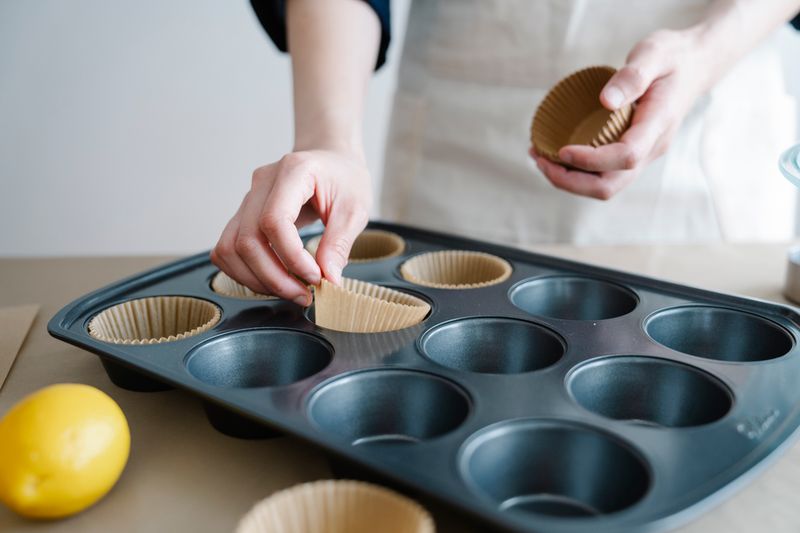
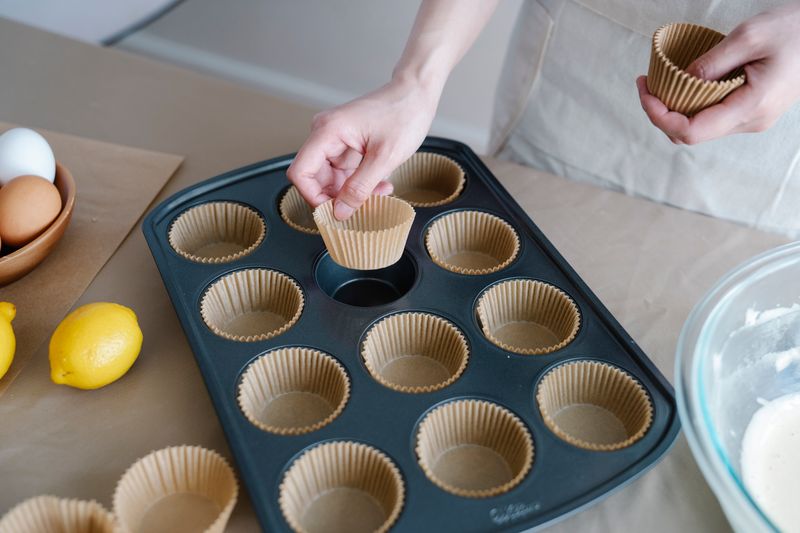
Tins & Tools
Tin volume, not tin diameter, is what you scale a recipe by
Moving from a 20cm round to a 23cm round is not a small change. The area grows by a third, and the batter depth changes everything about the bake.
What follows is the working version of scaling recipes between tin sizes: the decisions in the order you actually meet them, with the reasoning attached.
Before you start
- Area scales with the square of the radius, not with the diameter.
- Fill tins between half and two thirds full.
- Bigger tins need lower temperatures and longer times.
The arithmetic that catches people
The area of a round tin is proportional to the square of its radius, so a 23cm tin has about a third more area than a 20cm one. A 25cm tin has roughly fifty six per cent more area than a 20cm tin, which is a substantial difference in a batter quantity.
For the same batter volume, the larger tin gives a shallower cake that bakes faster and dries more. Scaling the recipe by the ratio of areas keeps the depth constant, which is what you usually want. So moving from 20cm to 23cm means multiplying every ingredient by about 1.3, not by 1.15.
Working in volume instead
The most reliable method is to fill your tins with water and record how much each one holds. Then scale by the ratio of the two volumes, which automatically accounts for depth as well as diameter.
This handles square, rectangular and loaf tins without any geometry at all. A square tin holds roughly a quarter more than a round tin of the same nominal size, which is a common trap. Write the volume on the underside of each tin with a permanent marker and never do the calculation again.
How full to fill
Most cake batters want the tin between half and two thirds full, depending on how much rise the recipe has. Overfilled tins overflow or bake into a mushroom shape with a raw seam where the overhang was.
Underfilled tins give thin, dry layers that overbake before they colour properly. Bread doughs in tins are usually judged by proving rather than fill level, but the same logic applies. If you are unsure, weigh the batter into the tin and note the figure that worked.
Temperature and time change too
A deeper batter needs longer for heat to reach the centre, so the outside overbakes while it waits. Dropping the temperature by ten to twenty degrees and extending the time evens this out.
Once the crumb sets, a shallower batter in a wider tin needs the opposite, since it can be baked hotter and faster. Bake times do not scale linearly with volume, which is why internal temperature is the only reliable guide.
As a rough guide, doubling the batter in the same tin can more than double the bake time.
Loaf tins and their labels
Loaf tins are commonly sold as 1lb and 2lb, which refer to a traditional dough weight rather than a dimension. Actual volumes vary considerably between manufacturers, so two 2lb tins can differ by twenty per cent.
Weighed out, measuring with water is the only way to know what you actually own. For bread, a rough guide is around 450 to 500g of dough for a 1lb tin and double for a 2lb. Overfilled bread tins produce a mushroom top that tears at the shoulders during oven spring.
Flour absorbs water differently by brand and by season; hydration is a target, not a rule.
Bundt and shaped tins
Bundt tins have a central tube that speeds heat into the middle, so they tolerate deeper batters than a plain round. They also have far more surface area, so greasing is critical and the bake often runs a little faster. Complex shapes create thin sections that overbake before thick sections are done.
At oven temperature, reducing the temperature and extending the time helps, as does choosing a robust batter rather than a delicate one. Volume is the only sensible way to scale into a shaped tin, since the geometry is otherwise unusable.
The takeaway
Measure your tins with water once, write the volumes on them, and scale by volume forever after.
Bake it badly once on purpose. The failure teaches more than the photograph.
Questions readers ask
Can I bake a 20cm recipe in a 23cm tin without scaling?
You can, and you will get a shallower cake that bakes several minutes faster. Reduce the time and check early, and accept a thinner layer than the recipe intended.
How do I convert a round recipe to a square tin?
A square tin of the same nominal size holds roughly twenty five per cent more, so scale the recipe up accordingly. Measuring both with water removes the guesswork entirely.