Tins & Tools
A set of one gram scales is the cheapest upgrade in the kitchen
Volume measures for flour vary by twenty per cent or more depending on how the cup was filled, which is enough to change a recipe into a different recipe.
These are listed in the order worth acting on, which with weighing baking ingredients is not the order they are usually presented in.
What matters most
- A cup of flour can weigh anywhere from about 120g to 150g.
- One gram resolution is enough for everything except yeast and salt.
- The tare button lets you weigh everything into one bowl.
Why volume measures fail
Flour compresses, so a scooped cup packs considerably more into the same space than a spooned and levelled one does. The difference between the two methods can easily be twenty per cent, which on a 500g recipe is a hundred grams of flour. That is enough to turn a 70 per cent hydration dough into a 60 per cent one without you changing a single instruction.
Sugar and liquids are more consistent by volume, but flour is the ingredient every baking recipe depends on most. This is the entire reason bread recipes written in cups are so much harder to reproduce than the same recipes in grams.
What resolution you actually need
A scale reading in whole grams up to five kilograms covers essentially all home baking, including large bread batches. Anything with a maximum below two kilograms will struggle once you put a mixing bowl on it and start adding flour. Yeast, salt and chemical raising agents are used in quantities where a gram matters proportionally more than elsewhere.
Weighed out, for those, a small scale reading to a tenth of a gram is genuinely useful, though a careful level teaspoon is workable. Precision beyond a tenth of a gram is a hobbyist indulgence rather than a baking requirement.
The tare button changes how you work
Weighing directly into the mixing bowl, zeroing between each addition, removes both washing up and transfer losses. It also means you can see the running total, which catches an error before it is buried under three more ingredients.
By the second rise, for baker's percentages this is close to essential, since you are constantly calculating against the flour weight. A scale that switches off after a minute of inactivity is a genuine irritation when weighing a long ingredient list. Check that behaviour before buying, since it is rarely mentioned in the specification.
Where scales pay off most
Bread benefits most, because hydration and salt percentages only mean anything if the flour weight is accurate. Pastry benefits next, since fat to flour ratios decide the texture and a heavy-handed cup ruins them. Cakes are more forgiving but still improve, particularly where the sugar to flour ratio is doing structural work.
Enriched doughs sit at the sensitive end, because butter percentages above thirty per cent leave very little margin. The one place volume genuinely suffices is a splash of vanilla or a pinch of spice.
Calibration and care
Check a scale occasionally with a known weight, since a bag of sugar or a litre of water is close enough for a sanity test. A litre of water at room temperature weighs almost exactly a kilogram, which is a free reference standard. Keep the platform dry and clean, because dried dough under a corner will throw the reading off consistently.
Batteries dying slowly cause drifting readings rather than a clean failure, which is harder to notice. If two weighings of the same bowl differ by more than a gram or two, change the battery before anything else.
Domestic ovens routinely run twenty degrees off their dial, so trust a thermometer over the setting.
Converting recipes you already own
Weigh each ingredient the first time you make a cup-based recipe and write the gram figure in the margin. After one bake you have a version you can reproduce exactly, which was never possible with the original.
Published conversion tables are a starting point but do not know how the author filled their cup. Your own measurements are more reliable than any table, because they capture what actually worked. This is fifteen minutes of effort that turns an unreliable recipe into a permanent one.
Everything above, in order of what to do first
- Why volume measures fail. Flour compresses, so a scooped cup packs considerably more into the same space than a spooned and levelled one does.
- What resolution you actually need. A scale reading in whole grams up to five kilograms covers essentially all home baking, including large bread batches.
- The tare button changes how you work. Weighing directly into the mixing bowl, zeroing between each addition, removes both washing up and transfer losses.
- Where scales pay off most. Bread benefits most, because hydration and salt percentages only mean anything if the flour weight is accurate.
- Calibration and care. Check a scale occasionally with a known weight, since a bag of sugar or a litre of water is close enough for a sanity test.
- Converting recipes you already own. Weigh each ingredient the first time you make a cup-based recipe and write the gram figure in the margin.
The takeaway
Weigh everything into one bowl, write the grams on the recipe, and stop guessing at flour.
Patience is an ingredient, and it is the one people leave out.
Questions readers ask
Do I need a separate scale for small quantities?
Only if you regularly work with yeast and salt in small batches, where a gram is a large proportion of the total. For loaves of 500g of flour or more, a whole-gram scale is perfectly adequate.
Is a mechanical scale good enough?
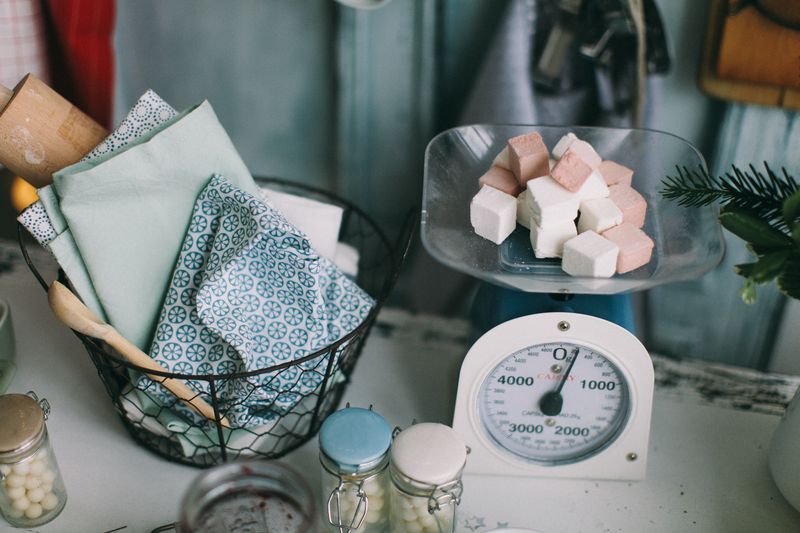
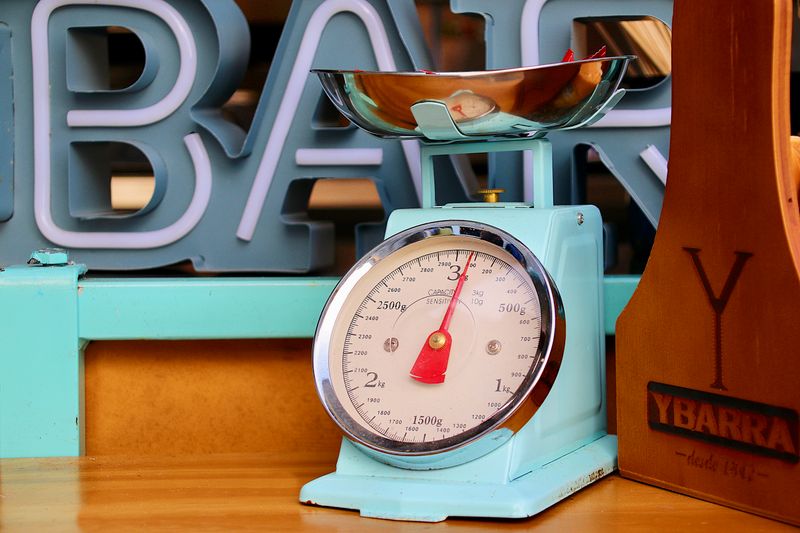
For rough work, yes, but most spring scales cannot resolve individual grams and none of them tare. The convenience of zeroing between ingredients is worth more than the accuracy on its own.
Also by Gaurav Bhattacharya
- Baker's percentages let you rescale, compare and diagnose any recipeBaking Science
- Altitude changes every leavened recipe, and pressure is the reasonBaking Science
- Amylase, falling number and why bakers add malt to flourBaking Science
- Your oven dial is a suggestion and a cheap thermometer proves itTins & Tools