Bread
Dough temperature is the dial most home bakers never touch
Two loaves from one recipe can behave nothing alike because one finished mixing at 22C and the other at 27C.
Bread
Two loaves from one recipe can behave nothing alike because one finished mixing at 22C and the other at 27C.
Bread
Hydration is not a difficulty rating. It is a set of trade-offs between handling, crumb structure and how much oven spring you…
Bread
Almost every dense loaf and every collapsed one traces back to the same decision, made by a clock that knew nothing about your…
Bread
A dough can pass the windowpane and still bake dense, because gluten development and gas retention are related but not the same…
Bread
Every shaping method, however it is described, is doing one job: building a taut outer skin that holds the gas in and directs the…
Bread
The fridge is not just a pause button. It changes which organisms are working, what they produce and how the dough handles the next…
Bread
A dry oven sets the crust within four or five minutes and locks the loaf at whatever size it happened to be. Steam delays that by…
Bread
The blade is not decoration. It chooses where the loaf will burst so the expansion goes where you want it rather than where the…
Bread
Once established, a starter is a competitive environment that keeps itself safe. Most of the anxiety around it comes from treating…
Bread
Two loaves from one recipe can behave nothing alike because one finished mixing at 22C and the other at 27C.
Bread
Hydration is not a difficulty rating. It is a set of trade-offs between handling, crumb structure and how much oven spring you can…
Bread
Almost every dense loaf and every collapsed one traces back to the same decision, made by a clock that knew nothing about your…
Cakes & Sponges
The pale, fluffy stage is not cosmetic. Sharp sugar crystals are tearing air pockets into soft butter, and those pockets become the…
Cakes & Sponges
Coating the flour in fat before any liquid arrives limits gluten development from the first second, which is the opposite of what…
Cakes & Sponges
Whole eggs whipped warm hold an astonishing amount of air, and steam expands that air in the oven. There is no chemistry involved…
Pastry
Butter has to be firm enough to stay in a sheet and soft enough to stretch with the dough. Outside roughly 15 to 18C, one of those…
Pastry
All three make layers. They differ in how the butter is distributed at the start, and that decides how even the lift is and how…
Pastry
Coating flour particles in fat before the water arrives is what keeps pastry short. Cream the butter instead and you get a biscuit…
Baking Science
There is no gluten in a bag of flour. It forms the moment water arrives, and everything you do afterwards decides how strong a…
Baking Science
Somewhere between about 60 and 80C, starch granules absorb water and swell into a gel. That transition is the moment a batter…
Baking Science
Browning is not just cooking for longer. It requires a specific combination of conditions, and a wet surface will never produce it…
Tins & Tools
Volume measures for flour vary by twenty per cent or more depending on how the cup was filled, which is enough to change a recipe…
Tins & Tools
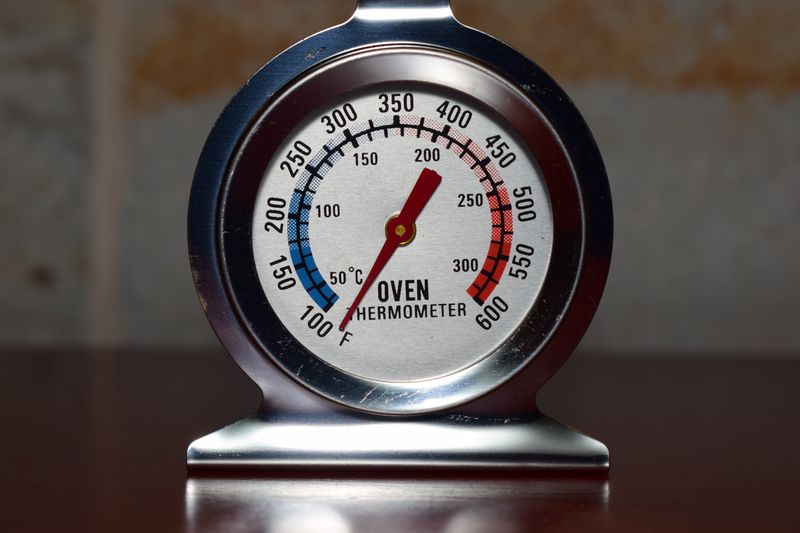
Domestic ovens routinely run twenty degrees away from their setting and swing thirty degrees either side of it as the thermostat…
Tins & Tools
A fan moves hot air across the food, which transfers heat far faster than still air. Dropping the temperature compensates for the…
When It Goes Wrong
Overmixing gets blamed for the crater in the centre of a cake, but the far more common cause is a structure that never finished…
When It Goes Wrong
A heavy loaf is the most common home baking failure and the least specific complaint. The pattern of the holes narrows it down to…
When It Goes Wrong
A little fat on the tray is normal and produces the fried base. A pool with pale, greasy pastry sitting in it means the lamination…