Cakes & Sponges
Creaming butter and sugar is aeration, and the sugar crystals do the cutting
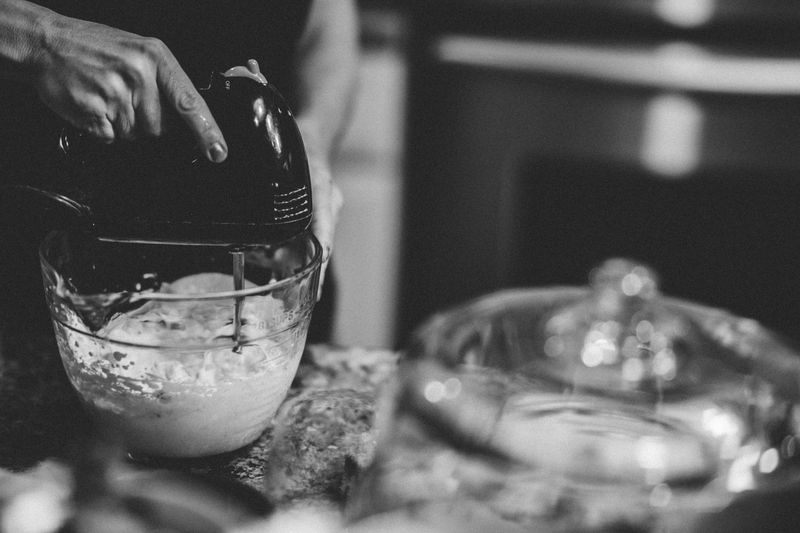
The pale, fluffy stage is not cosmetic. Sharp sugar crystals are tearing air pockets into soft butter, and those pockets become the…
Contributing writer, Bakemens
Sabyasachi covers pastry and works in a kitchen he describes as too warm for it.
Contact Sabyasachi through our contact page — mark your message for their attention and it will be passed on.
Cakes & Sponges
The pale, fluffy stage is not cosmetic. Sharp sugar crystals are tearing air pockets into soft butter, and those pockets become the…
Cakes & Sponges
Coating the flour in fat before any liquid arrives limits gluten development from the first second, which is the opposite of what…
Cakes & Sponges
Whole eggs whipped warm hold an astonishing amount of air, and steam expands that air in the oven. There is no chemistry involved…
Cakes & Sponges
One is a complete system and the other is only half of one. Recipes that use both are doing two different jobs at once, and…
Cakes & Sponges
Every extra stroke costs volume. Folding well is not about being gentle in a vague way, it is about a specific motion that mixes…
Pastry
Butter has to be firm enough to stay in a sheet and soft enough to stretch with the dough. Outside roughly 15 to 18C, one of those…
Pastry
All three make layers. They differ in how the butter is distributed at the start, and that decides how even the lift is and how…
Pastry
Coating flour particles in fat before the water arrives is what keeps pastry short. Cream the butter instead and you get a biscuit…
Pastry
Too little and the layers merge into bread. Too much and the butter cannot be contained during rolling, so it leaks and the…
Pastry
Two separate things happen during a rest, and knowing which one you need tells you whether thirty minutes is enough or three hours…
Pastry
There is no butter folded into filo. The thinness comes from a very extensible dough pulled by hand until you can read through it.
Pastry
The base of a tart is the hardest part to cook, because the filling sits on it absorbing heat and the tin insulates it from below.
Pastry
Pastry rises because water turns to steam. Deciding where that steam escapes, and whether it escapes at all, is a choice you make…
Pastry
Butter, lard, suet and shortening are not interchangeable, and the reason has less to do with flavour than with the temperature at…
Pastry
Two cooks following the same instructions end up with different quantities of egg, because what evaporated during the first cook…
Pastry
Cornflour, plain flour and tapioca all set the juices, and they set at different temperatures, clear to different degrees and…
Pastry
Whole egg, yolk and white each brown, shine and set differently, and the liquid you thin them with changes the result again.
Pastry
Rolling flour is an ingredient nobody measures, and a dough that has picked up a great deal of it is no longer the recipe you…