Cakes & Sponges
Creaming butter and sugar is aeration, and the sugar crystals do the cutting
The pale, fluffy stage is not cosmetic. Sharp sugar crystals are tearing air pockets into soft butter, and those pockets become the crumb.
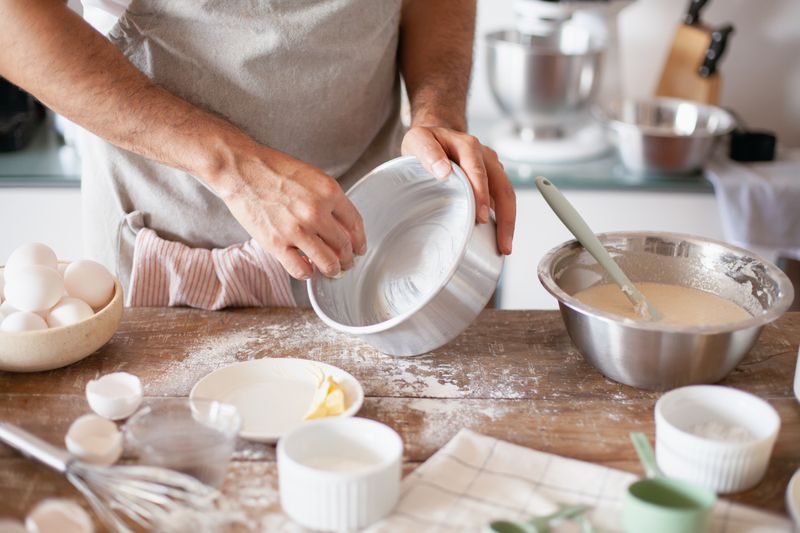
What follows is the working version of the creaming method: the decisions in the order you actually meet them, with the reasoning attached.
Before you start
- Butter needs to be around 18 to 20C, pliable but not greasy.
- Four to five minutes of creaming is typical, not thirty seconds.
- Caster sugar aerates better than granulated because of crystal size.
The mechanism nobody explains
Butter at the right temperature is a soft solid full of fat crystals, and it can hold air bubbles indefinitely once they are introduced. Sugar crystals are hard and angular, and as the beater drags them through the butter each edge cuts a tiny cavity that fills with air.
Those cavities are the nucleation sites the chemical raising agents will later inflate with carbon dioxide. Baking powder cannot create bubbles from nothing; it can only expand bubbles that already exist in the batter. This is why a rushed creaming stage produces a dense cake no matter how much raising agent the recipe contains.
Butter temperature is the whole game
Butter below about 16C is too firm for the crystals to move through, so almost no air is incorporated. Butter above roughly 22C is soft enough that the structure collapses and the air escapes as fast as it goes in. The workable window is narrow, around 18 to 20C, where the butter takes a fingerprint but holds its shape.
In the tin, fridge-cold butter cut into cubes and left out for thirty to sixty minutes usually lands there in an average kitchen. Microwaving to soften is the most common way to ruin this step, because the butter melts unevenly and partly liquefies.
How long and how fast
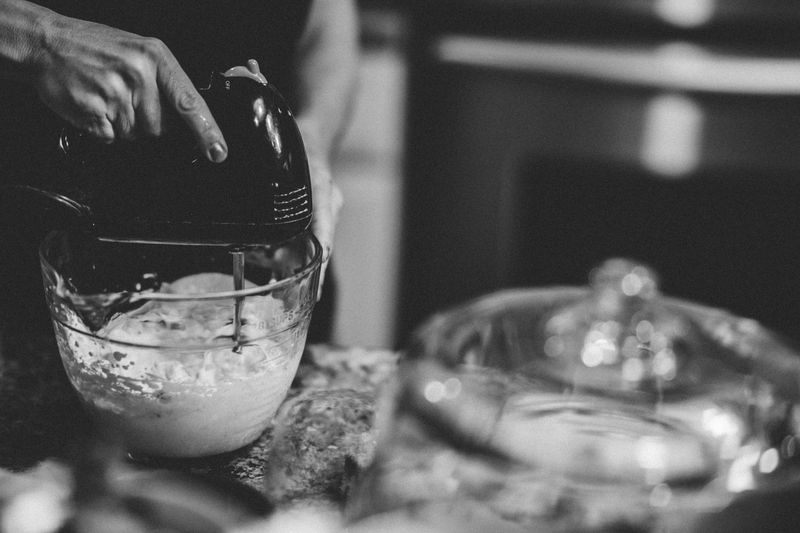
Four to five minutes on medium speed in a stand mixer is typical for 200g of butter, and by hand it takes longer still. The mixture should roughly double in volume, lighten from yellow to near white, and lose all sugary grittiness on the tongue.
By the second rise, high speed is not a shortcut, because it warms the butter through friction and drives air out as fast as it beats it in. Scrape the bowl at least twice, since the butter at the sides never passes under the beater otherwise. Undercreaming is far more common in home kitchens than overcreaming, and the difference in the baked crumb is obvious.
Sugar type matters
Caster sugar has crystals fine enough to disperse well but sharp enough to cut, which is why it is specified so often. Granulated sugar works but takes longer to dissolve and can leave a slightly coarser crumb and speckled top.
By the second rise, icing sugar has almost no crystal structure left and aerates poorly, which is why it belongs in frostings rather than creaming. Brown sugar contains moisture and dissolves faster, so it aerates less and gives a denser, softer result.
If a recipe insists on caster, that is a structural instruction rather than a stylistic preference.
Adding eggs without losing the air
Eggs are mostly water, and adding cold water to an aerated fat emulsion is how batters curdle and lose volume. Bring eggs to room temperature and add them a little at a time, beating until each addition is fully absorbed.
A spoonful of the measured flour added with the eggs gives the mixture something to hold onto and prevents splitting. If it splits anyway, keep going and add the flour; the cake will be slightly denser but perfectly edible. The visible curdle is a broken emulsion, and it costs volume rather than flavour.
Folding the flour in
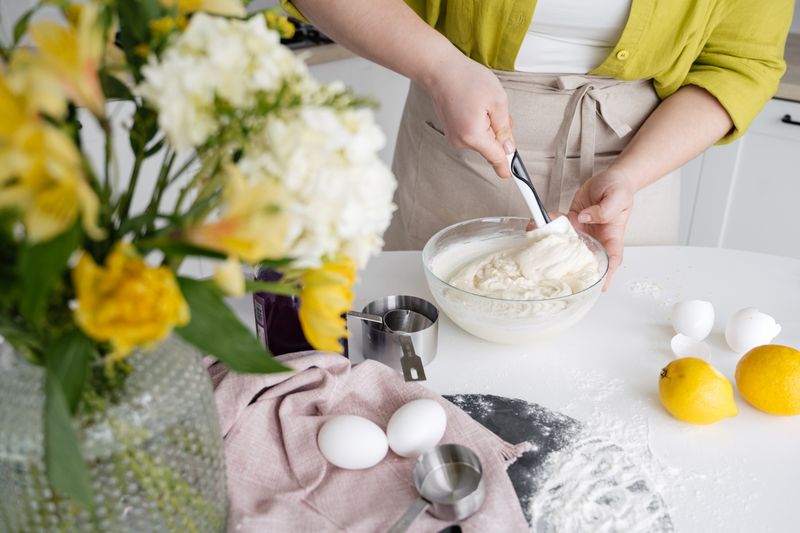
Once flour meets the wet batter, gluten begins forming, and in cake that means toughness rather than structure. Fold with a spatula in large slow strokes, cutting down through the middle and lifting from the bottom of the bowl.
Stop the moment no dry flour is visible, accepting a slightly streaky batter over a smooth overworked one. Beating flour in on the mixer both develops gluten and knocks out the air you spent five minutes creating. The whole method is an argument for doing the first stage thoroughly and the last stage barely at all.
The takeaway
Get the butter to 18C, cream for five minutes, then handle the flour as gently as possible.
Patience is an ingredient, and it is the one people leave out.
Questions readers ask
Can I cream butter straight from the fridge if I beat it longer?
Not effectively. Cold butter breaks into lumps rather than accepting air, and by the time friction has warmed it enough you have usually gone past the useful window in patches.
Does it matter if the mixture is not quite white?
Colour is a proxy for air, since more bubbles scatter more light. A slightly yellow mixture will still bake, but expect a closer crumb and less rise.
Also by Sabyasachi Roy
- Reverse creaming gives a tighter crumb, and here is why it worksCakes & Sponges
- A genoise has no baking powder, so what is lifting itCakes & Sponges
- Baking powder and bicarbonate of soda are not interchangeableCakes & Sponges
- Folding is the technique that decides how much of your foam survivesCakes & Sponges