Cakes & Sponges
Sugar in a cake is structure and moisture before it is sweetness
Cut the sugar by a third to make a cake healthier and you will also cut its tenderness, its keeping quality and most of its browning.
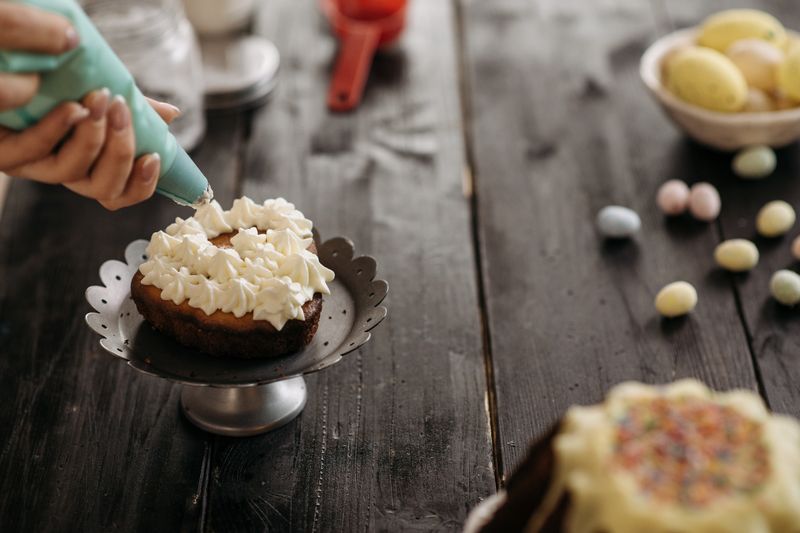
There is a settled way of talking about the structural role of sugar. It is worth asking how much of it survives contact with the detail.
The argument in brief
- Sugar raises the temperature at which egg and starch set.
- It holds water, keeping the crumb moist for days.
- Reducing sugar by more than about 20 per cent changes the cake fundamentally.
Sugar delays setting
Dissolved sugar raises the temperature at which egg proteins coagulate and starch gelatinises, sometimes by several degrees. That delay gives the batter longer in the oven before it sets, so bubbles have more time to expand.
A cake with less sugar therefore sets earlier and rises less, even with identical raising agent. It is one of the least intuitive facts in baking and it explains a great many failed reduced-sugar experiments. The effect is why very high sugar recipes can carry so much liquid without collapsing.
Sugar holds water
Sugar is hygroscopic, meaning it binds water and holds onto it against evaporation during and after baking. That bound water is what keeps a cake moist on day three rather than dry and crumbling.
It also means less free water is available to the flour, which further limits gluten formation and keeps the crumb tender. Reduce the sugar and the same cake goes stale visibly faster, regardless of how it is stored. Invert sugars such as honey and golden syrup hold water even more strongly, which is why they appear in keeping cakes.
Sugar and colour
Browning on the crust comes from caramelisation of the sugars and from Maillard reactions between sugars and proteins. Cut the sugar and the cake stays pale, which readers usually interpret as underbaked and then overbake to correct. Different sugars brown at different rates, with fructose-rich syrups colouring fastest of all.
The dough tells you first: this is why honey cakes need a lower oven than the equivalent recipe with white sugar. Colour is flavour as well as appearance, so a pale cake also tastes flatter.
Sugar as an aerating tool
In the creaming method the crystals cut air into the butter, so the quantity of sugar directly sets how much aeration is possible. Halve the sugar and you halve the number of crystal edges available to do that work. In meringue and foam cakes, dissolved sugar stabilises the egg protein film and stops the foam collapsing.
So sugar reduction damages three separate mechanisms at once, which is why the results are so disappointing.
A small reduction is survivable; a large one requires reformulating rather than editing.
Reducing it sensibly
A cut of ten to twenty per cent is usually tolerable and mostly reads as slightly less sweet with a marginally firmer crumb. Beyond about a quarter, expect a shorter, drier cake that browns poorly and stales within a day. Compensating with extra liquid usually makes things worse, because you have removed the ingredient that was managing the water.
Once the crumb sets, fruit purées add moisture and some sweetness but also acid and pectin, which changes the crumb in other ways. If low sugar is the goal, choose recipes designed that way rather than editing rich ones downward.
Weigh rather than scoop wherever a recipe leaves you the choice.
Different sugars, different results
Caster sugar dissolves quickly and aerates well, which is why it is the default for creamed cakes. Brown sugar carries molasses, which brings acidity, moisture and colour, and makes a softer, denser crumb. Icing sugar contains anti-caking starch and does not aerate, so it belongs in icings rather than batters.
Liquid sugars replace some of the recipe water and shift both the browning rate and the set temperature. Swapping one for another is a recipe change, not a like-for-like substitution.
The takeaway
Treat sugar as an ingredient with four jobs, and cut it only in small, tested steps.
Bake it badly once on purpose. The failure teaches more than the photograph.
Questions readers ask
Can I use a sugar substitute in a cake?
Sweeteners replace the taste but almost never the structure, moisture retention or browning. Blends designed for baking with added bulking agents do better, but expect a paler, shorter, faster-staling cake.
Why is my low sugar cake tough as well as pale?
Less sugar means more free water available to the flour, so more gluten forms during mixing. Fold more gently, or use a lower protein flour, to claw some tenderness back.