Cakes & Sponges
A genoise has no baking powder, so what is lifting it
Whole eggs whipped warm hold an astonishing amount of air, and steam expands that air in the oven. There is no chemistry involved at all.
The options around foam-leavened sponge cakes are set out side by side below, with the conditions that genuinely favour one over the other.
The difference in one place
- Warming eggs to about 40C lets them whip to far greater volume.
- The ribbon stage means the foam can hold its own weight.
- Melted butter deflates the foam unless it is folded in last and warm.
Where the rise comes from
Whipping whole eggs traps millions of small air bubbles inside a protein and water film, and that foam is the entire leavening system. In the oven, the trapped air expands with heat while water in the batter turns to steam and inflates the same bubbles further.
The egg proteins then set around the expanded structure somewhere between about 62 and 82C, locking the shape in place. No carbon dioxide is generated anywhere in the process, which is why a deflated foam cannot be rescued by adding baking powder. Everything that follows the whisking stage is about not losing what you built.
Warming the eggs
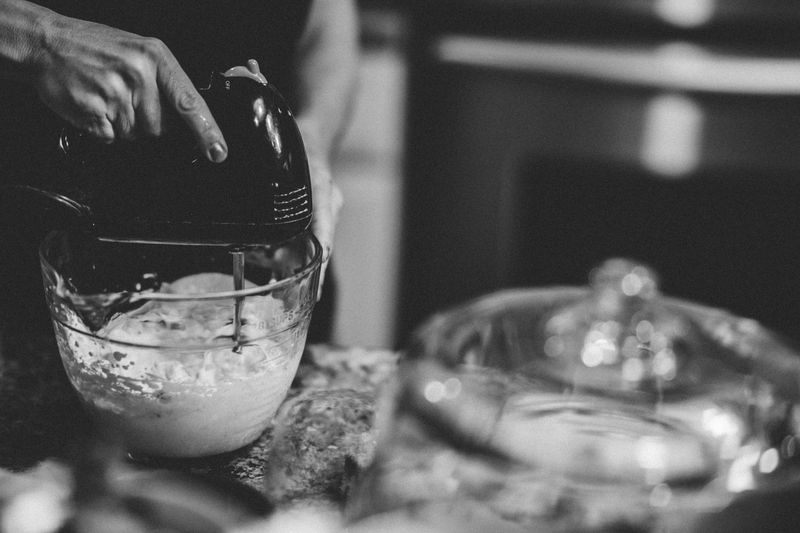
Egg foam whips faster and to greater volume when the eggs are warmed to around 40C, because the proteins unfold more readily and the liquid is less viscous. A bowl over barely simmering water, whisked constantly until the mixture feels warm to a fingertip, takes two or three minutes. Do not let it get hot enough to start cooking the egg, since even slight scrambling puts solid specks through the foam.
Adding the sugar during warming helps it dissolve completely, which strengthens the foam wall and prevents a gritty crumb. Cold eggs will eventually whip, but you will spend longer and finish with less volume.
The ribbon stage
The foam is ready when lifting the whisk leaves a ribbon of batter that sits on the surface for three to five seconds before sinking. That persistence is a direct measure of whether the foam can support its own weight, which is what it must do in the tin.
The mixture should have tripled in volume and turned pale, thick and almost mousse-like. Underwhipped foam gives a dense, rubbery layer at the bottom of the cake where the batter collapsed. Overwhipping is possible but rare, and shows as a dry, slightly grainy foam that folds badly.
Folding without collapsing it
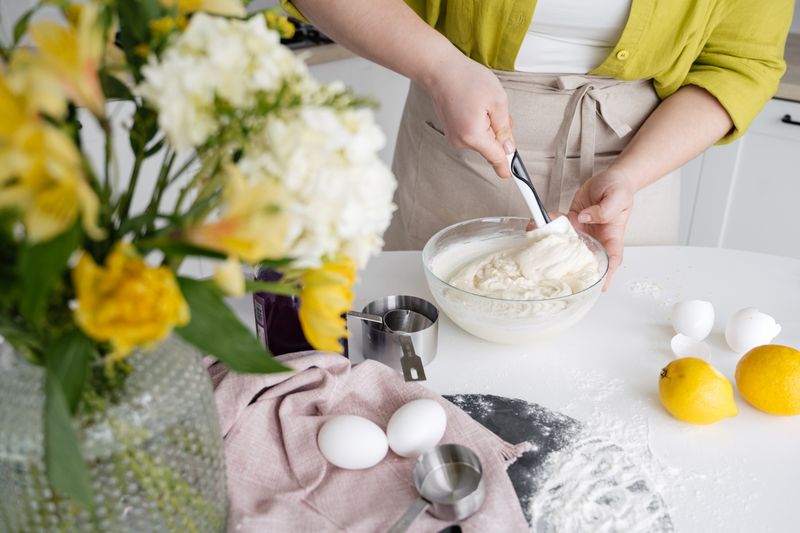
Sift the flour over the surface in two or three additions rather than tipping it in, since a lump sinks and takes air with it. Fold with a large spatula, cutting through the centre and sweeping around the bowl, rotating the bowl as you go.
In the tin, each addition should take twenty to thirty seconds, and you stop the moment the flour disappears. Every extra stroke costs volume, and a genoise that has been folded to a smooth glossy batter has already lost the fight.
Some deflation is inevitable and normal; the aim is to lose ten per cent rather than half.
The butter problem
Fat destabilises egg foam by interfering with the protein film, which is why fatless sponges whip so much more easily. If the recipe includes melted butter, take a large spoonful of the finished batter and mix it into the butter first. That lightened mixture then folds back into the main batter with far less damage than pouring butter over the whole bowl.
The butter should be melted but not hot, around 40 to 45C, so it does not cook the egg or set on contact. Add it at the very end, after the flour, and fold only until it is incorporated.
Flour absorbs water differently by brand and by season; hydration is a target, not a rule.
Into the tin and into the oven
Have the tin lined and the oven fully preheated before you start whipping, because the foam begins losing air immediately. Pour rather than spoon, and level with a single pass, since repeated smoothing knocks out air near the surface.
Bake at around 175 to 180C, and resist opening the door in the first two thirds of the bake. The cake is done when it springs back from a light press and has just started to shrink from the sides of the tin. Genoise is dry by design, which is why it is almost always soaked in syrup before assembly.
Side by side
| Consideration | What it means in practice |
|---|---|
| Where the rise comes from | Warming eggs to about 40C lets them whip to far greater volume. |
| Warming the eggs | The ribbon stage means the foam can hold its own weight. |
| The ribbon stage | Melted butter deflates the foam unless it is folded in last and warm. |
The takeaway
Warm the eggs, whip to a ribbon that holds five seconds, then fold as though the batter were expensive.
Bake it badly once on purpose. The failure teaches more than the photograph.
Questions readers ask
Can I add baking powder as insurance?
You can, and the result will rise, but it stops being a genoise and becomes a lighter sponge with a coarser crumb. If your foam is failing, fix the whipping rather than adding chemistry on top.
Why did my genoise have a dense rubbery layer at the bottom?
That is deflated batter that separated and sank, usually from overfolding, from a lump of unincorporated flour, or from butter poured straight into the foam.
Also by Sabyasachi Roy
- Creaming butter and sugar is aeration, and the sugar crystals do the cuttingCakes & Sponges
- Reverse creaming gives a tighter crumb, and here is why it worksCakes & Sponges
- Baking powder and bicarbonate of soda are not interchangeableCakes & Sponges
- Folding is the technique that decides how much of your foam survivesCakes & Sponges