Bread
What hydration actually changes in a dough, from 60 to 85 per cent
Hydration is not a difficulty rating. It is a set of trade-offs between handling, crumb structure and how much oven spring you can hold on to.
These are listed in the order worth acting on, which with dough hydration levels is not the order they are usually presented in.
What matters most
- Hydration is water weight divided by flour weight, not by total dough.
- 65 to 70 per cent suits most bread flours and most home ovens.
- Higher hydration needs stronger flour, not just more courage.
What the percentage is measuring
Hydration is the water weight expressed against the flour weight, so 700g of water to 1000g of flour is a 70 per cent dough. It is not water as a share of the whole dough, which is why 70 per cent sounds enormous but is entirely ordinary.
Anything in the dough that carries water counts, so milk is roughly nine parts water in ten and eggs about three quarters. Ignoring those hidden liquids is the usual reason an enriched dough behaves far wetter than its stated hydration suggests. Once you write everything as a percentage of flour, two recipes with different yields become directly comparable.
The 60 to 65 range
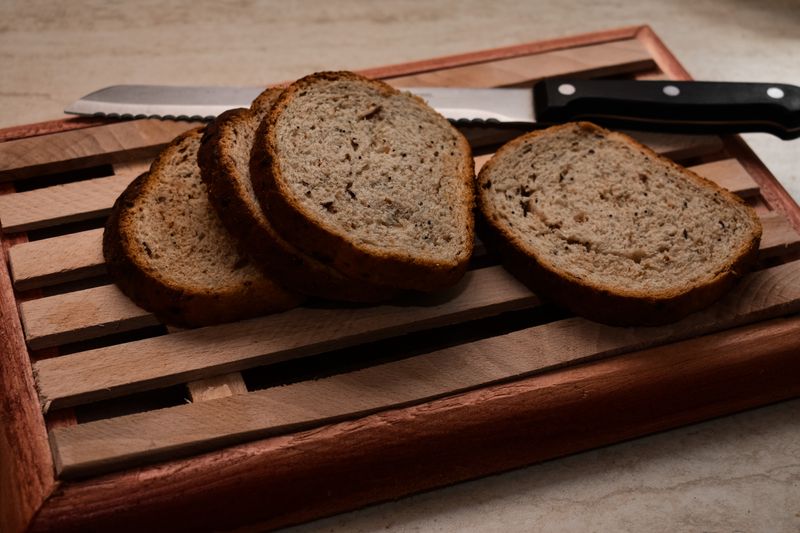
A dough at 60 to 65 per cent is firm, holds a shape without effort and is the natural home of tin loaves and sandwich bread. Gluten develops quickly at this stiffness because the strands are close together and mechanical work transfers efficiently.
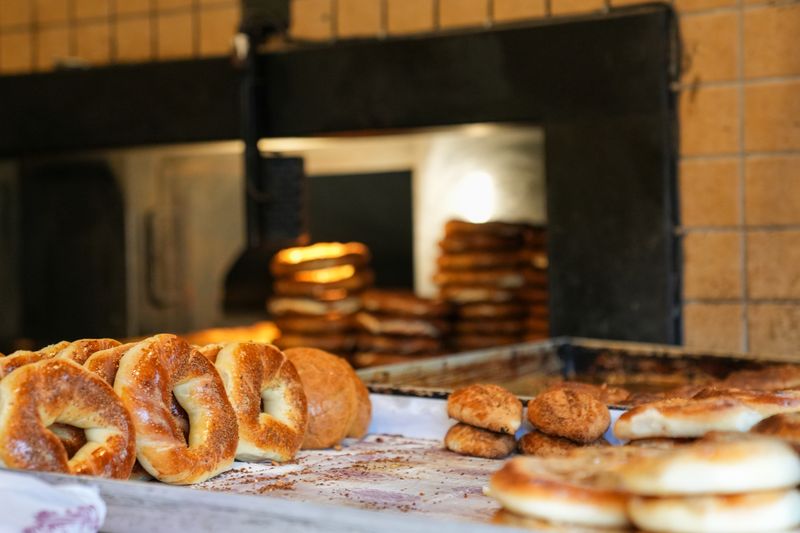
The dough tells you first: the crumb comes out fine and even, with small regular holes, which is exactly what you want under butter and jam. Bagels sit lower still, often at 55 per cent or under, which is why they need a mixer or a great deal of patience. Low hydration doughs also tolerate handling errors, because there is less water to squeeze out of the structure.
The 68 to 75 range
This is where most artisan-style loaves live, and where the crumb starts to open into irregular holes of varying size. The dough becomes slack enough to need coil folds or stretch and folds rather than sustained kneading. Bread flour with around 12 to 13 per cent protein handles this comfortably; a soft plain flour at 9 per cent will not.
Once the crumb sets, shaping tightens the surface enough to hold the gas, but you have perhaps a minute of good working time before it relaxes. For most home ovens and most bakers, this range gives the best return for the effort involved.
Above 80 per cent
Very high hydration doughs behave more like a thick batter, and they are poured and folded rather than kneaded. Ciabatta and some focaccia sit here deliberately, because the goal is large, glossy, irregular holes rather than a sliceable crumb. The risk is that a dough this slack spreads outward in the oven instead of upward, giving you a wide, flat loaf.
In the tin, baking in a tin, a banneton or a tightly enclosed vessel gives the structure the sideways support it cannot generate itself. Adding water without adding strength, either through flour choice or longer development, is the most common way this goes wrong.
Flour is the other half of the equation
Wholemeal absorbs noticeably more water than white flour, often five to ten per cent more, because bran and germ hold liquid. The same recipe run on wholemeal at the same hydration will feel dry and tight, and the crumb will be tighter still. Rye behaves differently again, because its pentosans hold water without forming a gluten network to hold gas.
In the tin, older flour and drier storage conditions both shift absorption, which is why a familiar recipe sometimes feels wrong. Adjust by feel in ten or twenty gram steps and write down what you settled on.
Domestic ovens routinely run twenty degrees off their dial, so trust a thermometer over the setting.
Choosing a number on purpose
Decide what you want from the crumb first, then pick the hydration that produces it rather than chasing the highest figure you can manage. A tight, even crumb for toast is a legitimate goal, and 63 per cent will get you there faster than 80 ever will.
If you want open crumb, raise hydration in five per cent steps across successive bakes and keep everything else identical. Changing hydration and flour and fermentation time together tells you nothing, because you cannot attribute the result. Most bakers find their own ceiling somewhere between 72 and 78 per cent, and there is no prize for going past it.
Everything above, in order of what to do first
- What the percentage is measuring. Hydration is the water weight expressed against the flour weight, so 700g of water to 1000g of flour is a 70 per cent dough.
- The 60 to 65 range. A dough at 60 to 65 per cent is firm, holds a shape without effort and is the natural home of tin loaves and sandwich bread.
- The 68 to 75 range. This is where most artisan-style loaves live, and where the crumb starts to open into irregular holes of varying size.
- Above 80 per cent. Very high hydration doughs behave more like a thick batter, and they are poured and folded rather than kneaded.
- Flour is the other half of the equation. Wholemeal absorbs noticeably more water than white flour, often five to ten per cent more, because bran and germ hold liquid.
- Choosing a number on purpose. Decide what you want from the crumb first, then pick the hydration that produces it rather than chasing the highest figure you can manage.
The takeaway
Pick the hydration your flour and your hands can handle, then get better at that number.
Patience is an ingredient, and it is the one people leave out.
Questions readers ask
Does higher hydration always mean a more open crumb?
No. Water makes an open crumb possible but shaping, fermentation length and gluten strength decide whether you actually get one. A poorly shaped 80 per cent dough will be denser than a well handled 70 per cent one.
Should I count the water in a sourdough starter?
Yes, and the flour too. A starter at equal weights of flour and water is 100 per cent hydration, so 200g of it adds 100g of each side of the calculation.