Bread
Dough temperature is the dial most home bakers never touch
Two loaves from one recipe can behave nothing alike because one finished mixing at 22C and the other at 27C.
Bread writer, Bakemens
Anirban writes about dough and keeps a starter he refuses to name.
Contact Anirban through our contact page — mark your message for their attention and it will be passed on.
Bread
Two loaves from one recipe can behave nothing alike because one finished mixing at 22C and the other at 27C.
Bread
Hydration is not a difficulty rating. It is a set of trade-offs between handling, crumb structure and how much oven spring you can…
Bread
A dough can pass the windowpane and still bake dense, because gluten development and gas retention are related but not the same…
Bread
Every shaping method, however it is described, is doing one job: building a taut outer skin that holds the gas in and directs the…
Bread
Salt in dough is a structural ingredient with a narrow useful range, and both ends of that range are obvious in the finished loaf.
Bread
Crust colour tells you what the surface did. A probe in the centre tells you whether the starch has set and the crumb will slice.
When It Goes Wrong
A heavy loaf is the most common home baking failure and the least specific complaint. The pattern of the holes narrows it down to…
When It Goes Wrong
A loaf that spreads into a disc instead of rising had the gas but not the container. Finding which stage failed takes one look at…
Bread
The folding takes seconds and the waiting takes the rest of the afternoon, which is a fair description of where the work actually…
Bread
A rye dough that behaves like wheat is a rye dough with very little rye in it, and the difference is not stubbornness but chemistry.
Bread
Cutting the yeast in a recipe does not make a smaller loaf, it makes a slower one, and slow is where most bread flavour comes from.
Bread
Adding water to chase big holes usually produces a flat loaf with a wet crumb, because hydration is one input among several and…
When It Goes Wrong
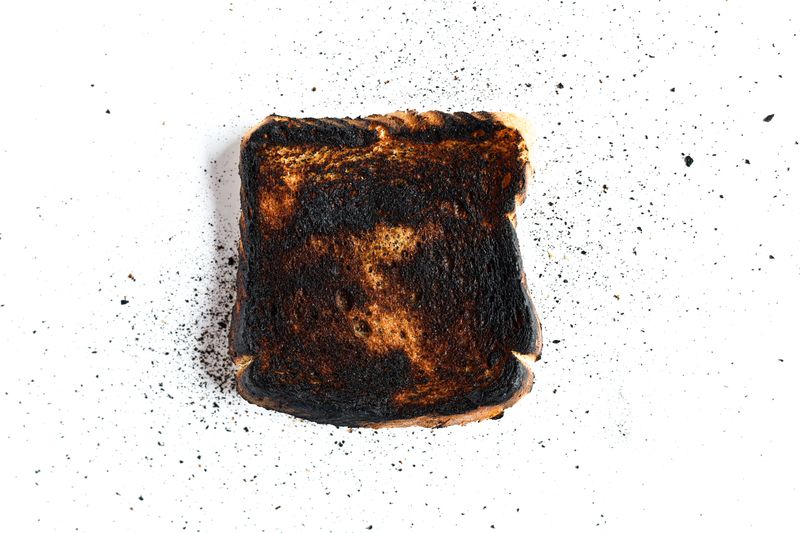
The last stretch of a bake removes moisture faster than any earlier part of it, which is why a small overrun does so much damage.
When It Goes Wrong
The same protein that gives bread its chew makes a cake unpleasant, and almost every route to it runs through the mixing bowl.
When It Goes Wrong
Sourdough starters are described as dying far more often than they actually die, and three ordinary explanations cover almost every…