Bread
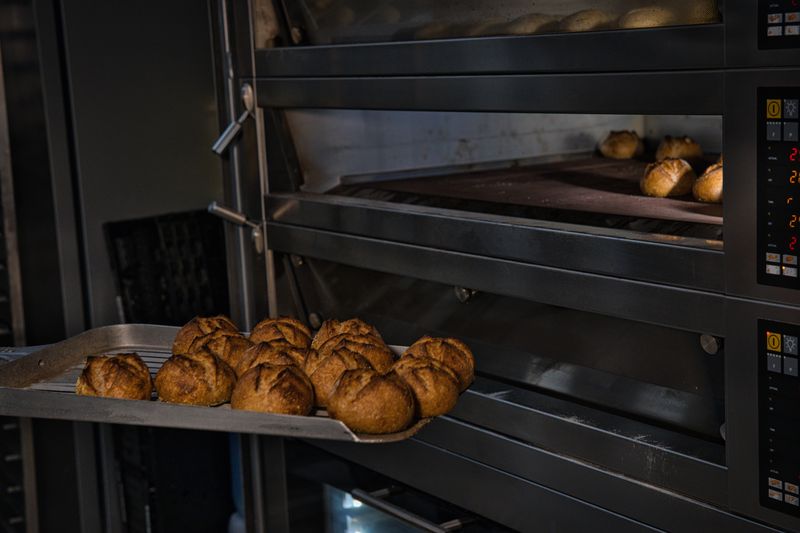
Bake bread to an internal temperature, not to a shade of brown
Crust colour tells you what the surface did. A probe in the centre tells you whether the starch has set and the crumb will slice.

What follows is an argument about internal temperature of a baked loaf, and about where the received version of it stops being true.
The argument in brief
- Lean loaves finish around 93 to 99C at the centre.
- Enriched doughs are done lower, near 88 to 93C.
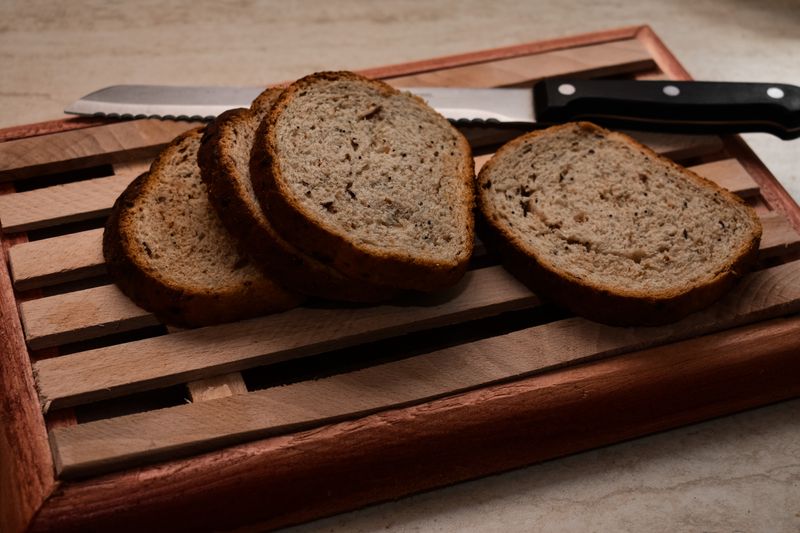
- The hollow-knock test is unreliable on dense and wholemeal loaves.
What the number represents
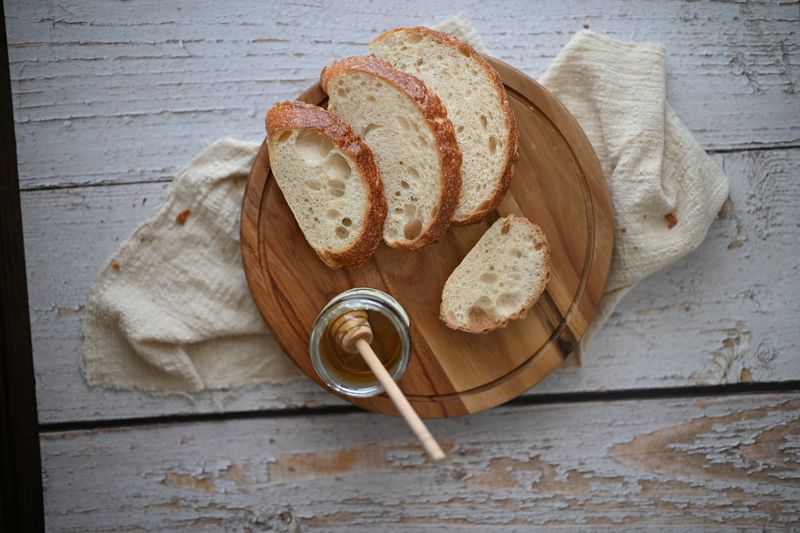
Starch gelatinisation and protein setting are what turn wet dough into sliceable crumb, and both are temperature events. For a lean loaf, the centre needs to reach somewhere around 93 to 99C, which is effectively the boiling point of the dough water. Below that, pockets of the crumb are still gelatinising and the loaf will feel gummy when cut.
Above it, the crumb continues drying out and the loaf gets progressively tougher for no gain. Colour cannot tell you any of this, because the crust reaches browning temperatures long before the centre catches up.
Different breads, different targets
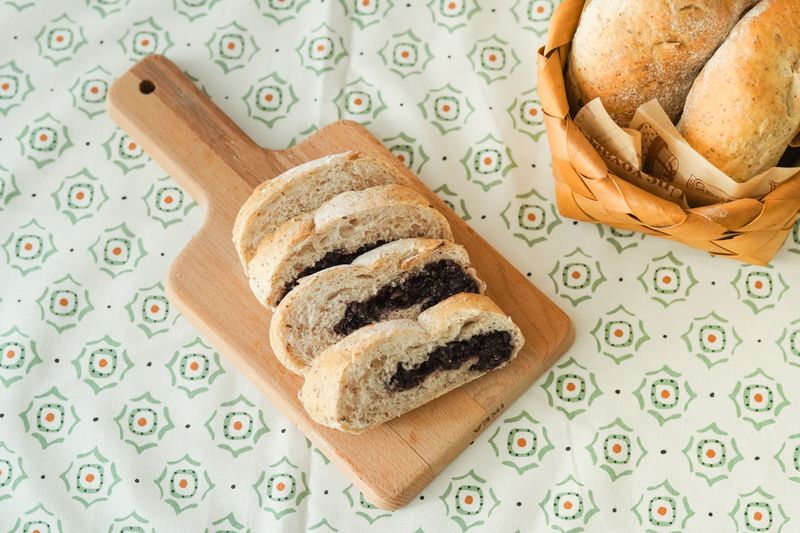
Enriched doughs with butter, egg and sugar set at a lower temperature and are usually pulled at 88 to 93C. Very wet, open-crumbed loaves benefit from the upper end, since there is more water to drive off. Rye breads are the outlier, often baked to a similar internal temperature but needing a full day of resting before slicing.
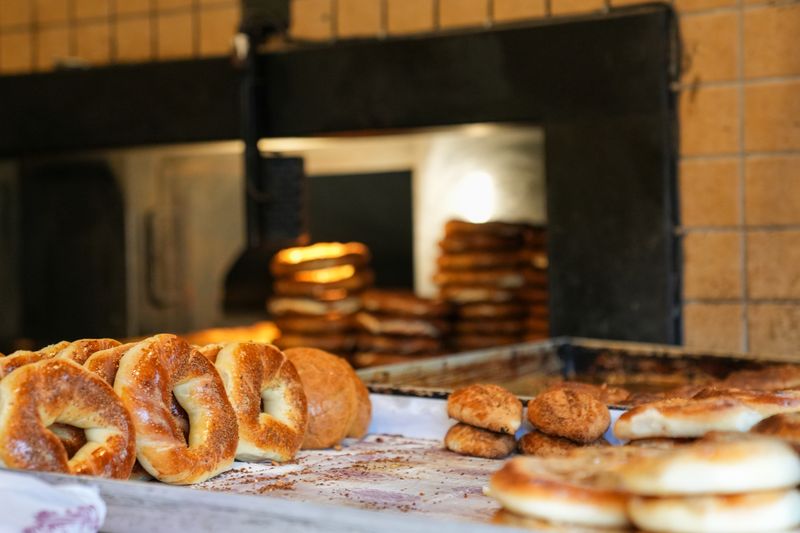
The dough tells you first: steamed and enriched buns are done nearer 88C, and pushing them higher simply dries them. These are ranges rather than exact points, and a degree either way makes no practical difference.
Using the probe properly
Insert from the base or the side at an angle, aiming for the geometric centre of the loaf rather than just under the crust. An instant-read digital probe settles in two to four seconds; a dial thermometer can take thirty and will mislead you if you rush it.
Do not probe through a large hole, since an air pocket reads hotter than the surrounding crumb. One clean hole in the base is invisible once the loaf is on the board, so there is no cosmetic reason to avoid it. Check twice in different spots if the loaf is large or oddly shaped.
Why the knock test fails
The hollow sound comes from a dry crust over a set crumb, and both a slightly underbaked and a well baked loaf can produce it. Dense wholemeal and rye loaves never sound hollow, so the test simply does not apply to them. Tin loaves sound different from free-standing ones because the tin damps the resonance.
Once the crumb sets, it is a useful confirmation once you already know what your own bread sounds like at the correct temperature.
As a primary test on an unfamiliar recipe it is close to guesswork.
Carryover and cooling
A loaf out of the oven continues to rise a degree or two internally for a few minutes, then begins losing heat from the outside in. The crumb is still setting during cooling, which is why slicing hot bread produces a compressed, gummy texture. A 900g loaf needs roughly ninety minutes to two hours on a rack before it is properly set.
Once the crumb sets, rye and very wet loaves want longer still, sometimes overnight, and cutting early ruins an otherwise good bake. The steam escaping during cooling is what turns a soft crust crisp, so do not wrap it while warm.
When temperature is right but the loaf is wrong
If the centre reached 96C and the crumb is still dense, the problem is fermentation or shaping rather than baking. If the crust is dark but the temperature is low, the oven is running hot and the loaf needs a lower, longer bake.
The dough tells you first: if the temperature is right but the crust is pale, the oven is running cool or the steam stayed on too long. Separating these questions is exactly what the thermometer buys you, and it costs very little. A single accurate number removes the largest source of ambiguity in the whole process.
The takeaway
Buy a probe, learn your two target ranges, and stop arguing with the crust about doneness.
Bake it badly once on purpose. The failure teaches more than the photograph.
Questions readers ask
Can I put the loaf back in if it comes out underdone?
Yes, and it works better than people expect. Return it to the oven for five to ten minutes, uncovered, and probe again rather than guessing a second time.
Does the tin or pot change the target temperature?
No, the internal target is a property of the dough, not the vessel. What changes is how long the loaf takes to get there, since a heavy pot transfers heat differently from a thin tray.