Pastry
Flaky and short are opposite textures built from the same three ingredients
Flour, fat and water make both, and the only real difference is how large the pieces of fat were when the water arrived.
Most explanations of flaky versus short pastry stop at the point where it starts to matter. This one carries on.
The short version
- Large fat pieces melt into steam pockets and give flakes.
- Fat rubbed to crumbs coats flour and gives shortness.
- Both work by keeping water away from the flour proteins.
The single variable that separates them
In both pastries, fat is preventing water from fully hydrating flour proteins, which is what stops the dough turning tough. Rubbed to fine crumbs, the fat coats a huge surface area of flour and interrupts the gluten network everywhere at once. Left in visible flakes and sheets, the fat coats far less flour but occupies space that later becomes a gap.
The first gives a crumbly, sandy texture that breaks cleanly, which is what shortness means. The second gives layers that separate and lift, which is what flakiness means.
How a flake actually forms
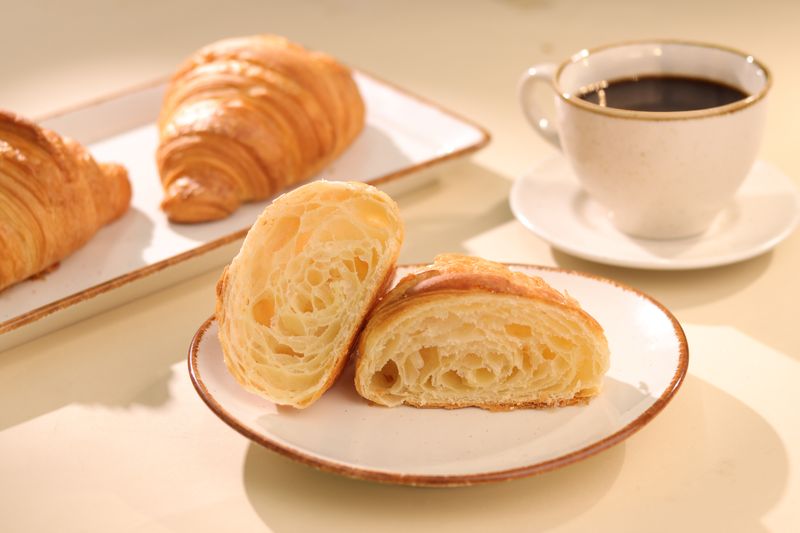
A flat piece of solid fat sitting between two sheets of dough melts as the oven heats it. The water in that fat and in the dough around it turns to steam, pushing the two dough sheets apart.
The dough tells you first: the dough sets in that separated position, leaving an air gap where the fat used to be. Fat that has melted into the dough before baking cannot do this, because there is no discrete piece to vacate. Everything about keeping pastry cold serves this one requirement of having solid fat still present at the oven door.
How shortness actually works
Rubbing fat into flour produces coated particles that water can only partially penetrate. Gluten forms in patches rather than as a continuous network, so the baked pastry has no strength to resist a bite. More fat, finer rubbing and softer fat all push the result further towards short and away from flaky.
Adding a proportion of a fat that is soft at room temperature, or using an egg yolk, increases shortness further. The limit is a dough so short it will not hold together enough to line a tin, which is a real risk in sweet pastries.
Doughs that do both
Most home pastry sits somewhere between the two, with some fat rubbed in and some left in visible pieces. A rough puff is built almost entirely on the flaky principle, with large fat pieces flattened by rolling and folding.
The dough tells you first: a traditional pie pastry often rubs in half the fat and leaves the rest in pieces, producing a crust that is both tender and layered. Which balance you want depends on the job, since a quiche base wants strength and a pie lid wants lift.
Deciding that before you start is more useful than following a recipe without knowing which texture it was aiming at.
Temperature is the referee
Warm hands, a warm kitchen and a warm bench all push fat towards melting into the flour, which moves everything towards short. That is fine if shortness is your aim and fatal if you wanted flakes, which is why laminated work is done cold. Chilling the flour and the bowl helps in a hot kitchen, and working quickly helps more than working carefully.
In the tin, a food processor is excellent for rubbing in and poor for keeping fat in pieces, because the blade cuts everything small. Resting the dough in the fridge before rolling firms the fat again and relaxes the gluten you did develop.
Diagnosing which one you got
Pastry that is tough and leathery had too much water reaching the flour and too much working afterwards. Pastry that crumbles into sand and will not hold a shape had too much fat or was rubbed too far.
By the second rise, pastry that leaked fat into the tin had fat pieces that melted before the dough set, usually from being too warm. Pastry with dense, greasy layers rather than crisp ones had fat that softened and merged during rolling. Each of these points at a specific stage, which makes pastry unusually easy to diagnose compared with bread.
The takeaway
Decide whether you want layers or crumbs first, because the same three ingredients will give you either.
Bake it badly once on purpose. The failure teaches more than the photograph.
Questions readers ask
Can I use the same dough for a pie base and a pie lid?
You can, and many recipes do, though the base benefits from a shorter dough and the lid from a flakier one. Making two doughs is worth it only when the pie is the point of the meal.
Does the type of fat decide flakiness?
It contributes, since fats that stay firm at higher temperatures survive rolling better and give cleaner layers. Handling and temperature still matter more than which fat you chose.