Tins & Tools
Parchment, silicone mats and greasing: which surface for which bake
The lining is not just about release. It changes how much heat reaches the base and how much the item spreads while it bakes.

What follows is the working version of lining baking trays and tins: the decisions in the order you actually meet them, with the reasoning attached.
Before you start
- Silicone mats insulate slightly and reduce base browning.
- Parchment releases well and conducts better than silicone.
- Greasing alone gives the crispest base but the least reliable release.
Bare greased metal
Fat on bare metal gives the most direct heat transfer, so bases brown fastest and crisp most. It is the traditional choice for bread tins, Yorkshire puddings and anything wanting a fried, crisp base.
Release depends on the tin being well seasoned or genuinely non-stick, and it fails unpredictably on old tins. Greasing and flouring adds a barrier that improves release but leaves a slightly pale, floury surface. For a delicate cake in an unfamiliar tin, this is the riskiest option available.
Baking parchment
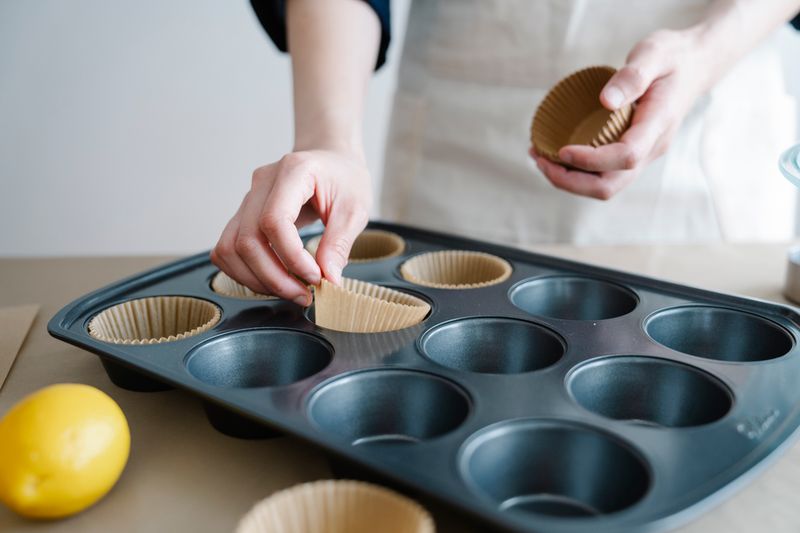
Parchment is silicone-coated paper that releases reliably and conducts heat almost as well as bare metal. It is the default for cakes, biscuits and lining tins, and it removes almost all release anxiety. Greaseproof paper is not the same thing and will stick, which catches people out regularly.
In the tin, parchment can generally be reused several times for dry bakes, which reduces the cost considerably. It also lets you lift a whole tray of biscuits off to cool without moving each one individually.
Silicone mats
A silicone mat is durable, non-stick and reusable for years, which is genuinely appealing. It also insulates slightly, so bases brown less and items can spread more before they set.
At oven temperature, for biscuits that you want crisp and well browned underneath, that is a real disadvantage. For meringues, macarons and anything delicate, the gentler base heat is exactly what you want. Perforated mats sit between the two, allowing more heat and air through to the base.
Matching surface to bake
Bread and pizza want the most direct heat available, so bare metal or a preheated stone beats any lining. Cakes want reliable release and even heat, which parchment provides better than anything else. Biscuits depend on whether you want them crisp and spread or soft and contained.
By the second rise, choux benefits from a very slightly greased tray, since too much grease makes the buns slide and spread.
Macarons are traditionally baked on parchment or a mat, and switching between them changes the foot noticeably.
Lining awkward shapes
For a round tin, cut a disc for the base and a strip for the sides, which is faster than wrestling one sheet. For a loaf tin, a single strip running along the length with overhang gives you handles to lift the loaf out.
Scrunching parchment and smoothing it out makes it far more willing to sit in corners. A dab of butter under the parchment holds it in place while you pour the batter. For springform tins with wet batters, a foil wrap outside prevents leaks onto the oven floor.
What not to use
Aluminium foil sticks badly to most batters and conducts heat aggressively, which browns bases too fast. Waxed paper melts and should never go in an oven, though it is fine for wrapping and for rolling out. Reusing parchment that has burnt or gone brittle risks it tearing and shedding onto the food.
Cutting silicone mats to fit a tin destroys them and voids any usefulness, so buy the size you need. Cooking sprays build up a sticky varnish on non-stick tins over time and are worth avoiding on good ones.
The takeaway
Pick the lining for the base you want, not just for the release you need.
Bake it badly once on purpose. The failure teaches more than the photograph.
Questions readers ask
Can I bake directly on a silicone mat on the oven shelf?
You should not, since it needs a rigid tray beneath it for both support and heat transfer. Without one it sags between the bars and the base heats very unevenly.
Why do my biscuits spread more on a silicone mat?
The mat is slightly slippery and insulates the base, so the dough softens and flows before the structure sets. Chilling the dough or switching to parchment usually brings the spread back under control.