Baking Science
Water activity, not moisture, decides how long a bake keeps
Two cakes with the same amount of water can behave completely differently in the tin, because what matters is how much of that water is free to move.
There is a short answer about water activity in baked goods and a useful one, and they are not the same. What follows is the useful one.
The short version
- Sugar and salt bind water and make it unavailable.
- Available water is what allows spoilage organisms to grow.
- A moist-tasting bake is not necessarily a wet one.
Free water and bound water
Water in a bake is either free to move and react, or bound to sugars, starches, proteins and salts. Only free water participates in spoilage, in staling reactions and in the movement of moisture between components. Two bakes containing identical total water can therefore behave very differently depending on what that water is bound to.
This is why a rich fruit cake keeps far longer than a lean sponge with a similar moisture content. The idea is measured industrially as water activity, and although you cannot measure it at home you can reason with it.
Why sugar changes keeping quality
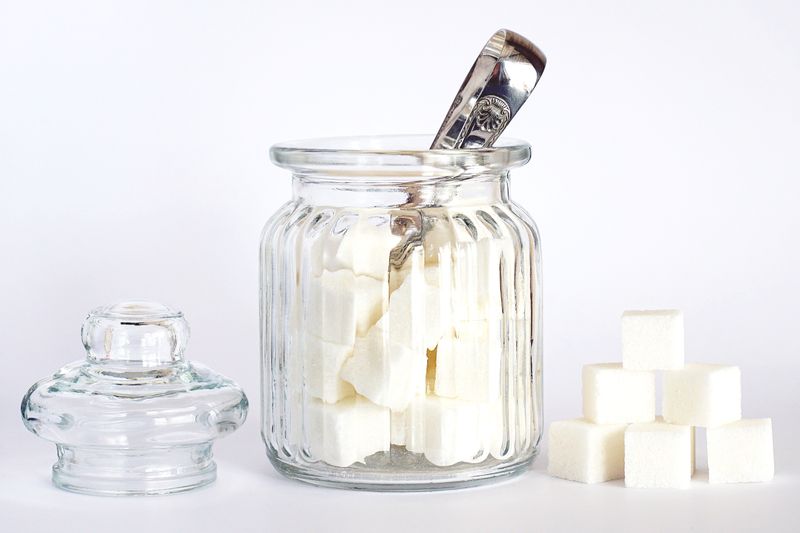
Sugar dissolves into the water present and holds onto those molecules, reducing how many are free. That is why heavily sweetened bakes resist mould longer than lightly sweetened ones of similar moisture. Syrups and invert sugars bind water more strongly still, which is part of why they appear in long-keeping recipes.
Salt does the same thing, which is one reason it appears in preserved foods far beyond baking. None of this makes a bake safe indefinitely, and national food safety guidance should decide how long you keep anything.
Moisture migration inside a bake
Water moves from areas where it is more free to areas where it is less, seeking equilibrium across a bake. That is why a crisp pastry base under a wet filling softens, and why a biscuit next to a cake goes soft. It also explains why a filled and iced cake changes texture overnight even though nothing was added.
Barriers such as a chocolate layer, a baked jam glaze or a pre-baked base slow that migration considerably. Assembling components as late as possible is the simplest way to keep contrasting textures apart.
Staling is not the same as drying
A bake sealed in a bag can go firm without losing any water at all, because starch recrystallisation does not need evaporation. Drying is water leaving, and staling is water becoming unavailable within the structure that still holds it. Both make a bake seem old, and they need different responses, since one is a wrapping problem and the other is not.
Warming a stale bake temporarily reverses some of the starch change, which is why toast improves old bread.
Nothing reverses genuine drying, since the water has left the bake entirely rather than merely being rearranged inside it.
What wrapping actually does
Wrapping slows the exchange of moisture between the bake and the air around it in both directions. A crisp-crusted loaf wrapped tightly goes soft, because moisture from the crumb has nowhere to go but the crust.
A soft bake left open dries out, because the drier air around it draws water from the surface. The right wrapping therefore depends on which texture you are trying to protect. Cooling completely before wrapping matters in every case, since trapped steam condenses and creates a wet surface.
Freezing and what it preserves
Freezing stops most spoilage and slows staling reactions dramatically, since it removes free water as ice. The structure is largely preserved if the bake is wrapped well enough to prevent moisture loss to freezer air. Thawing releases that water back into the structure, which is why a well-frozen cake can be very close to fresh.
The dough tells you first: repeated freezing and thawing damages structure, since ice crystals grow and rupture cells each time. Follow national guidance on freezing and reheating rather than any figure quoted in a recipe.
The takeaway
Ask how much of the water is free rather than how much is there, and keeping quality starts to make sense.
Temperature and time are the same argument held at opposite ends.
Questions readers ask
Does adding more liquid make a cake keep better?
Not necessarily, since free water encourages spoilage as readily as it improves texture. Binding the water with sugar, syrup or fat does more for keeping than simply adding more.
Why does my bread go mouldy faster than shop bread?
Commercial bread often contains ingredients that bind water or inhibit mould, and it is packed in controlled conditions. Home bread is usually best frozen if it will not be eaten within a couple of days.