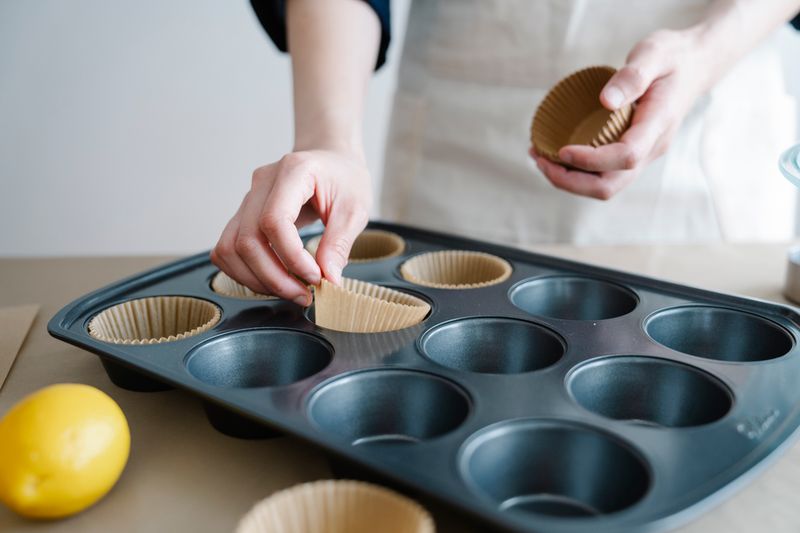
Tins & Tools
Springform, loose-bottomed and bundt tins each fail in their own way
Specialist tins exist because some cakes cannot be turned out of a solid tin, and every one of those designs trades a solved problem for a new one.
Treat the sections below as a sequence. With specialist cake tins, getting the early decisions right makes the later ones much easier.
Before you start
- A springform releases fragile cakes but leaks thin batters.
- A loose base is easier to clean and just as prone to leaking.
- Bundt tins demand thorough greasing because of their shape.
Why a solid tin is not always enough
Turning a cake out of a solid tin means inverting it, which relies on the cake being strong enough to hold together upside down. Delicate, wet or unbaked-set fillings cannot survive that, which is why cheesecakes and mousse cakes need another route out. A springform or a loose base lets the sides come away without the cake ever being turned over at all.
That is the entire reason these tins exist, and everything awkward about them follows from that one requirement. For a robust sponge that turns out cleanly, a solid tin is simpler, cheaper and less likely to cause trouble.
Where springform tins leak
The seal between the base and the ring depends on a clamp and on the two parts having stayed perfectly flat. A thin batter finds any gap, runs out and burns on the oven floor while the cake above bakes short of liquid. Wrapping the outside in foil is the usual defence, and it also protects against water in a water bath.
Standing the tin on a tray catches whatever escapes and saves the oven if the wrapping fails. Warped tins leak worse over time, which is why a springform that has been dropped rarely recovers.
Loose-bottomed tins
A loose base sits in a rim and is pushed up from below to release the cake, with no clamp involved. They leak for the same reason springforms do, and thin batters should be treated with the same suspicion. They are easier to clean, since there is no mechanism to trap crumbs and old fat.
In the tin, pushing up from below is easier with a tall jar or tin beneath than with one hand supporting the rim. For deep tarts and quiches they are the standard choice, since a pastry case cannot be inverted.
Bundt and patterned tins
A patterned tin has a very large surface area relative to its volume, so the cake grips it in many places at once. Every ridge and crevice must be coated, and a missed patch is exactly where the cake will tear on release.
By the second rise, soft fat brushed thoroughly into the pattern, followed by flour and a good tap to remove the excess, is the traditional method. Batters need to be firm enough to hold the detail, since a loose batter loses definition as it rises.
The central tube also means the cake bakes faster than its size suggests, since heat reaches the middle from within.
Getting a cake out of a patterned tin
Cooling briefly in the tin lets the cake contract slightly and pull away from the sides before it is turned out. Leaving it too long lets the sugars set against the metal, which is when it welds itself in place. A firm tap on the bench or a gentle shake usually tells you whether it has released before you commit to turning it.
If part of it stays behind, warming the tin briefly softens the sugars and often frees it. A broken bundt is a presentation problem rather than a baking one, and a glaze hides a great deal.
Flour absorbs water differently by brand and by season; hydration is a target, not a rule.
Choosing what to own
One springform and one solid tin in a common size covers most home baking without duplication. Deep tins are more versatile than shallow ones, since a shallow batter in a deep tin still bakes correctly. Heavy tins hold heat more evenly and warp less, which matters more than any coating or colour claim.
Weighed out, novelty shapes are used rarely and stored constantly, which is worth weighing before buying one. Whatever you buy, note its volume rather than its diameter, since that is the figure recipes actually scale by.
The takeaway
Match the tin to how the cake will come out, then grease as if the cake is trying to stay in.
Patience is an ingredient, and it is the one people leave out.
Questions readers ask
Can I use a springform for a very liquid batter?
You can if you wrap it thoroughly and stand it on a tray, though a solid tin is safer where the cake can be turned out. Foil around the outside is worth doing every time rather than only when you expect a leak.
Why did my bundt cake stick despite greasing it?
Usually a patch was missed, or the greasing was thin in the deepest parts of the pattern. Melted butter runs off the ridges as it warms, so soft fat brushed in works better than melted.