When It Goes Wrong
That dense wet layer at the bottom of your cake has a specific cause
A distinct band of heavy, damp crumb across the base is not general underbaking. Something separated and sank before the structure could hold it in place.
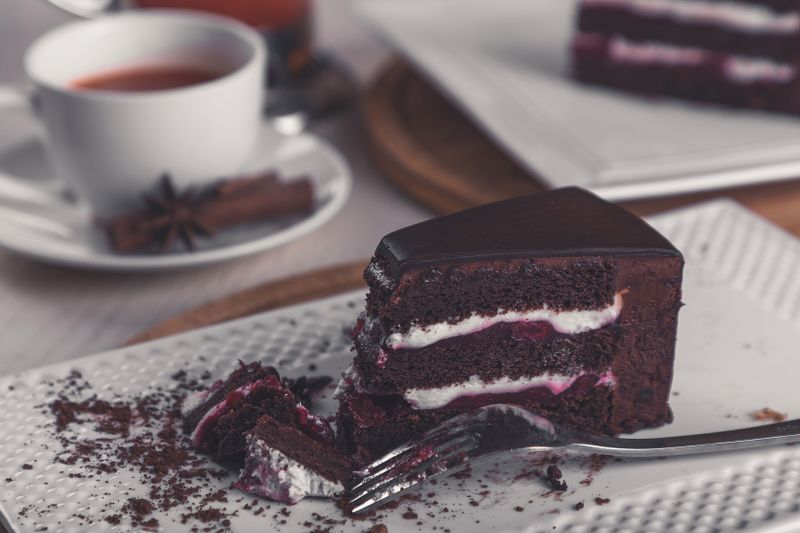
Everything below about a dense layer at the base of a cake comes from what actually happens rather than from what is supposed to.
What holds up in practice
- Deflated batter sinks because it is denser than the aerated batter above.
- A broken emulsion is the most common origin.
- Unincorporated flour or melted butter both sink for the same reason.
What the layer is made of
The dense band is batter that lost its air and therefore became denser than the aerated batter surrounding it, so it settled to the bottom before the crumb set. It is not raw batter in the sense of being uncooked; it is fully baked but has none of the bubble structure that makes the rest of the cake light.
That is why it looks translucent and slightly rubbery rather than wet, and why extra baking time never fixes it. Understanding this rules out the oven as the cause and points you back at what happened in the bowl. The distinction between a wet layer and a deflated layer is the whole diagnosis.
Overfolding a foam
In a genoise or any foam-leavened cake, every extra fold destroys bubbles, and the deflated portion is heavier than the rest. It sinks as the batter sits in the tin, forming a distinct layer within a couple of minutes of pouring.
Once the crumb sets, the fix is to fold in large, confident strokes with a big spatula and stop while faint streaks of flour remain visible. Slackening the base with a third of the foam first reduces the total number of strokes needed dramatically. Getting the batter into the tin and into a preheated oven quickly limits how long gravity has to work.
A broken emulsion
If the batter split when the eggs went in, the fat and water separated and the mixture lost the air it had been holding. The heavier separated portion sinks in the tin and bakes as a dense, slightly greasy band across the base. Room temperature eggs added a little at a time, with a spoonful of the measured flour, prevent almost every split.
At oven temperature, once split, beating for another thirty seconds often brings it back before you add more liquid. A cake from a split batter is usually still good, but a visible base layer means the split was severe.
Melted butter poured into a foam
Adding melted butter directly to a whipped egg foam is a reliable way to produce a heavy base layer, because fat destabilises the protein film on contact. The butter and the deflated foam around it sink together, forming a greasy stratum a few millimetres thick. Mix the butter with a large spoonful of the finished batter first, then fold that lightened mixture back in at the very end.
The butter should be around 40 to 45C, warm enough to stay liquid but nowhere near hot enough to cook the egg.
This one change eliminates the fault entirely in most genoise recipes.
Unmixed flour and heavy additions
A lump of flour that never dispersed sinks and hydrates in place, producing a dense, pasty patch at the bottom. Sifting flour over the surface in two or three additions rather than tipping it in prevents lumps forming at all. Heavy additions such as fruit, chocolate chunks or nuts sink in a thin batter for the same density reason.
At oven temperature, tossing them in a spoonful of the recipe flour helps them grip the batter, and a stiffer batter suspends them better. If the layer contains visible fruit or chocolate, this is the cause rather than any mixing fault.
Proving times are written for a warm kitchen, and yours may not be one.
Preventing it in general
The common thread is that anything denser than the batter will sink if the batter stays liquid long enough for it to move. So the two preventions are keeping the batter aerated and getting it into a hot oven quickly so it sets sooner. Have the tin lined and the oven fully preheated before you begin mixing anything that involves a foam.
Do not let a mixed batter stand while you deal with something else, since chemical leaveners also begin losing lift immediately. A batter that goes from bowl to oven in under two minutes rarely develops a base layer at all.
The takeaway
The layer is deflated batter, so fix the folding and the butter rather than the baking time.
Patience is an ingredient, and it is the one people leave out.
Questions readers ask
Is the dense layer safe to eat?
Yes, it is fully baked and simply has a heavy, rubbery texture. Most people trim it off, though it is a matter of preference rather than safety.
Why does it happen in some recipes and never in others?
Foam-leavened and heavily aerated batters are far more vulnerable, since they depend entirely on bubbles that can be lost. A robust batter with a lot of flour and chemical leavening rarely develops the fault.