When It Goes Wrong
Layers That Slide And Buttercream That Bulges Are Settling Problems
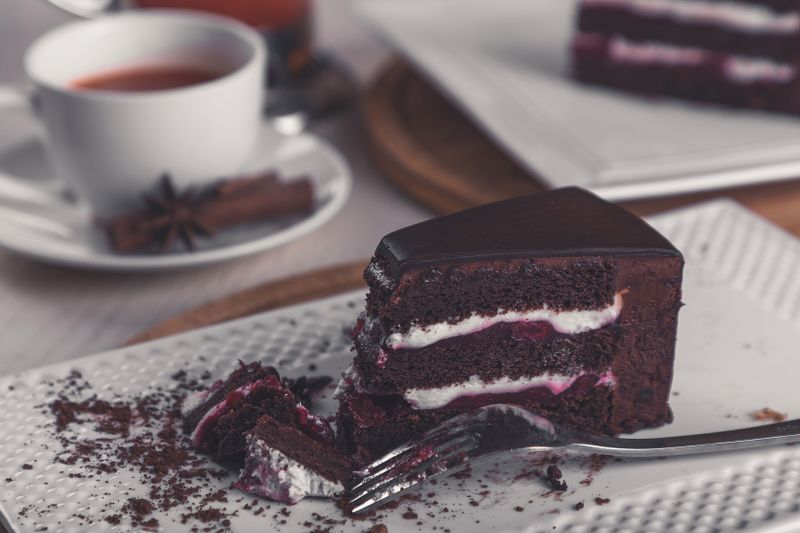
A filled cake continues to compress under its own weight after assembly, and filling that cannot resist that pressure escapes sideways, pushing the icing out at the seams.

A layer cake that looked clean when assembled and has a bulge around each seam an hour later has not been badly iced. It has settled.
Cake compresses under its own weight
Cake crumb is a foam, and foams compress. A stack of layers presses down on those below, and the lowest layers deform most.
Compression continues for a considerable time after assembly, particularly if the cake is still slightly warm or was recently handled.
As the layers settle, the volume between them decreases, and whatever is in that space has to go somewhere.
The filling takes the path of least resistance
Soft fillings such as jam, curd or loose cream have no structural strength and flow outward under even light pressure.
They push against the outer coat of icing, which stretches or lifts away from the cake, producing the characteristic bulge at each layer line.
Once that has happened, smoothing the outside again only conceals it temporarily, because the filling is still under pressure.
A dam is the standard prevention
Piping a ring of firm buttercream around the edge of each layer before adding a soft filling contains it within a wall that can resist the pressure.
The dam must be the same buttercream used outside, or at least equally firm, since a soft dam simply moves the problem outward.
Keeping the filling slightly inside the edge rather than out to the rim gives it somewhere to spread into as the cake settles.
Settling before icing removes the cause
Assembling the filled layers, then chilling the cake under light weight for a period, lets most of the compression happen before the final coat goes on.
The buttercream also firms as it chills, so the structure it forms is much better able to hold the layers in place.
Only after that is the outer coat applied, which is why professional assembly is done in stages with waiting between them.
Sliding is a separate failure
Layers that shift sideways rather than bulging are usually sitting on a filling too slippery to grip, or were stacked out of alignment.
Chilling firms the filling and restores grip, and internal supports are used for tall cakes where the weight exceeds what any filling can hold.
Uneven layers make both problems worse, since a domed layer concentrates the load at its centre and forces the filling outward from there.
Questions readers ask
Does a cave mean the bread is underbaked?
No, since it is a structural fault rather than a doneness one, and the loaf is usually baked correctly. Check the internal temperature separately if you are unsure.
Can I still use a loaf with a big cave in it?
Yes, though the slices with the void in them are awkward for sandwiches. Toasting and cutting into smaller pieces makes it a non-issue.