Baking Science
Gelatin And Pectin Set A Filling By Different Routes
One builds a protein mesh that melts near body temperature and the other needs sugar and acid to form a sugar-bound gel, which changes where each belongs.

Gelatin and pectin both turn a liquid into something sliceable, and they do it by unrelated chemistry. The difference decides which one a filling can use.
Gelatin builds a protein network on cooling
Gelatin dissolves in warm liquid and, as the mixture cools, its long protein chains link into a three-dimensional mesh that traps the liquid inside it.
The set is thermally reversible. Warm the gel and the links come apart; cool it again and they reform.
Because that melting point sits near body temperature, a gelatin gel dissolves in the mouth, which is the source of its particular clean, melting texture.
Pectin needs sugar and acid to form its gel
Pectin is a plant carbohydrate found in fruit, concentrated in apples and citrus peel. On its own in water it does very little.
With enough sugar to compete for water and enough acid to reduce the repulsion between chains, the molecules associate and form a network.
That is why a jam recipe specifies both a high sugar level and lemon juice. Neither is only about flavor; both are conditions the gel requires.
Their failure modes are different
A gelatin set fails by melting, so a mousse or a chiffon pie left in a warm room slumps and cannot be recovered by chilling once served.
A pectin set fails by never forming, which happens when the sugar is too low, the acid is too low or the mixture was not cooked long enough.
Once a pectin gel has set it is stable at room temperature, which is why jam sits on a shelf and a gelatin glaze does not.
Some ingredients destroy gelatin outright
Fresh pineapple, kiwi, papaya and a few other fruits contain enzymes that break protein chains, and they prevent gelatin from setting at all.
Cooking those fruits deactivates the enzymes, which is why canned pineapple works in a gelatin dessert and fresh does not.
Pectin is unaffected by this, since there is no protein for the enzymes to attack.
It has its own incompatibility instead: a fruit low in acid or low in natural pectin will not gel without help, which is why commercial pectin is sold alongside added acid.
Choosing between them is a use decision
Gelatin suits chilled desserts that will be eaten cold and where a melting mouthfeel is wanted: mousses, panna cotta, stabilized whipped cream.
Pectin suits fruit preserves, glazes and fillings that must hold at room temperature through service and transport.
Starch sits alongside both as a third option, setting opaque and holding heat well, which is why it rather than either gel thickens a hot fruit pie.
Questions readers ask
Does altitude affect pastry as much as cake?
Much less, since pastry relies on steam and fat rather than on chemical leavening holding a delicate structure. The main effect is faster drying, which can be countered with a slightly wetter dough.
Is there one adjustment that helps most?
Reducing the chemical raising agent is usually the single most effective change for cakes. It directly addresses the over-expansion that causes the collapse.
Also by Gaurav Bhattacharya
- Baker's percentages let you rescale, compare and diagnose any recipeBaking Science
- Amylase, falling number and why bakers add malt to flourBaking Science
- A set of one gram scales is the cheapest upgrade in the kitchenTins & Tools
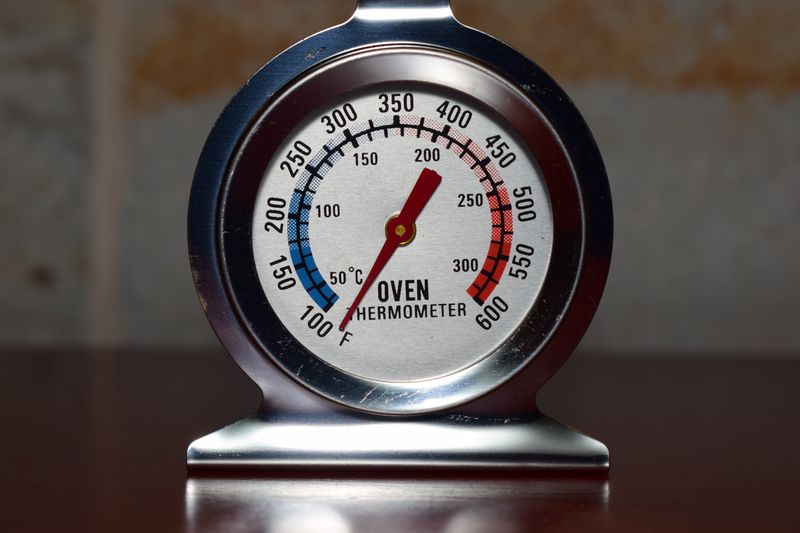
- Your oven dial is a suggestion and a cheap thermometer proves itTins & Tools