Baking Science
Sugar Competes With Yeast For Water Before It Feeds It
High sugar levels draw water out of yeast cells by osmosis, so sweet doughs ferment slowly despite the abundant food, and specialised yeast strains exist for exactly this.

Sugar is food for yeast, which suggests a sweet dough should ferment fast. Sweet doughs are famously slow, and osmosis explains the contradiction.
Dissolved sugar holds water
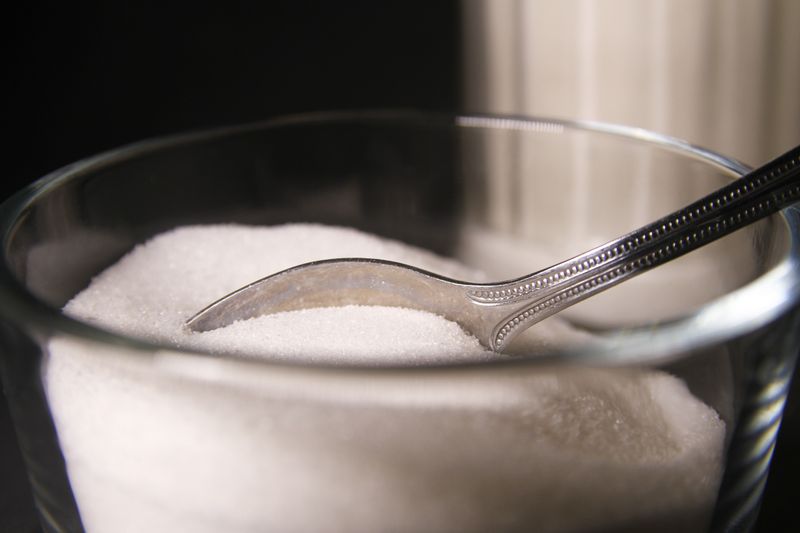
Sugar in solution binds water molecules to itself, which lowers the amount of water freely available to everything else in the dough.
A yeast cell sits in that solution with its own internal water. When the surrounding liquid is more concentrated than the cell's contents, water moves outward.
The cell loses turgor and its metabolism slows. It is not starved of food but of the water it needs to function.
The effect scales with concentration
At low levels, sugar's contribution as food outweighs the osmotic cost, and a small addition to a lean dough measurably speeds fermentation.
Beyond a moderate proportion the balance reverses, and each further addition slows the dough more than the extra food compensates for.
Heavily enriched doughs sit well past that point, which is why they need more yeast, longer proofing, or both, to rise in a workable time.
Salt does the same thing
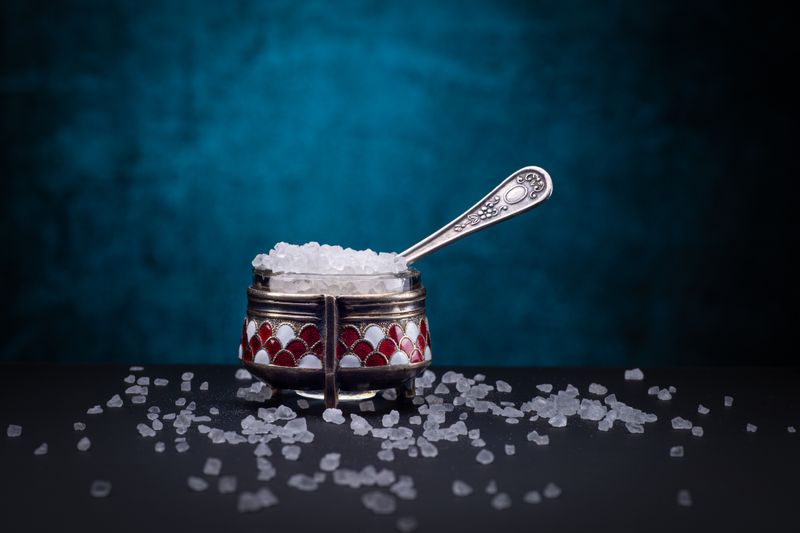
Salt is a much smaller molecule and exerts a strong osmotic effect at low concentrations, which is a large part of why it slows fermentation.
The two effects add together, so a dough that is both salted and heavily sweetened faces a compounded restriction.
Keeping salt and yeast apart at the mixing stage matters most in these doughs, since undiluted salt against yeast is the most concentrated contact possible.
Osmotolerant strains exist for the purpose
Some yeast strains are selected for their ability to maintain internal water balance in concentrated solutions and ferment reliably in sweet doughs.
These are sold specifically for enriched baking and behave poorly in lean doughs, where their advantage is irrelevant and their activity profile is different.
Using ordinary yeast in a very sweet dough is not a mistake, but it requires more of it and a schedule adjusted to the slower rate.
Fat compounds the delay
Sweet doughs are usually rich in fat as well, and fat coats both flour and yeast, physically slowing the movement of water and gas.
This is why enriched doughs are often mixed in stages, with fat and sugar added after the gluten has developed in a leaner base dough.
Splitting the mix that way gives the yeast and the flour a period of easy conditions before the difficult ingredients arrive.
Questions readers ask
Does altitude affect pastry as much as cake?
Much less, since pastry relies on steam and fat rather than on chemical leavening holding a delicate structure. The main effect is faster drying, which can be countered with a slightly wetter dough.
Is there one adjustment that helps most?
Reducing the chemical raising agent is usually the single most effective change for cakes. It directly addresses the over-expansion that causes the collapse.
Also by Gaurav Bhattacharya
- Baker's percentages let you rescale, compare and diagnose any recipeBaking Science
- Amylase, falling number and why bakers add malt to flourBaking Science
- A set of one gram scales is the cheapest upgrade in the kitchenTins & Tools
- Your oven dial is a suggestion and a cheap thermometer proves itTins & Tools