Baking Science
Tempering Chocolate Is Choosing Which Crystal Form Grows
Cocoa butter can solidify in several crystal structures, and tempering is a heating and cooling routine that ensures only the stable, glossy one is present.

Chocolate that snaps, shines and releases cleanly from a mold has been tempered. The process controls which of several possible crystal structures the cocoa butter forms as it sets.
Cocoa butter can set in more than one arrangement
The fat in chocolate can solidify into several distinct crystal forms, each with its own melting point and physical character.
Only one of them produces the hard snap, the glossy surface and the clean release that finished chocolate is judged on.
The others set softer, duller and lower-melting, and they convert slowly toward the stable form over time, which is what produces bloom on old chocolate.
Melting fully erases the existing structure
Heating chocolate above the melting point of every crystal form leaves the cocoa butter entirely liquid with no template for what comes next.
From that state the fat will set into whichever form happens to nucleate first, and the unstable forms nucleate more readily.
Which is why chocolate simply melted and poured sets dull, soft and streaky. Nothing was wrong with the ingredients; the crystals were not directed.
Cooling and rewarming selects the survivor
Cooling the melted chocolate encourages crystals of several types to form. Warming it gently afterward melts the unstable ones while leaving the stable ones intact.
What remains is a liquid seeded with the correct crystal form, which then directs the rest of the fat to set the same way.
The temperatures involved are narrow and differ between dark, milk and white chocolate, because the milk fat in the latter two changes the melting behavior.
Working the chocolate on a cool surface accelerates the cooling stage and keeps it moving, which is the reason for the marble slab rather than any property of the stone itself.
Seeding does the same job by a shorter route
Adding a quantity of already-tempered chocolate to a melted batch introduces the correct crystals directly instead of growing them.
The added pieces must not melt entirely, so the melted chocolate has to be cool enough for them to survive and act as templates.
It is the method most home cooks use, because it requires only a thermometer and patience rather than a marble slab.
Temper is lost as easily as it is gained
Overheating tempered chocolate at any point melts the seed crystals and returns it to the untempered state.
Water is the other hazard: even a trace causes the sugar particles to stick together and the mass to seize into a grainy paste that cannot be tempered.
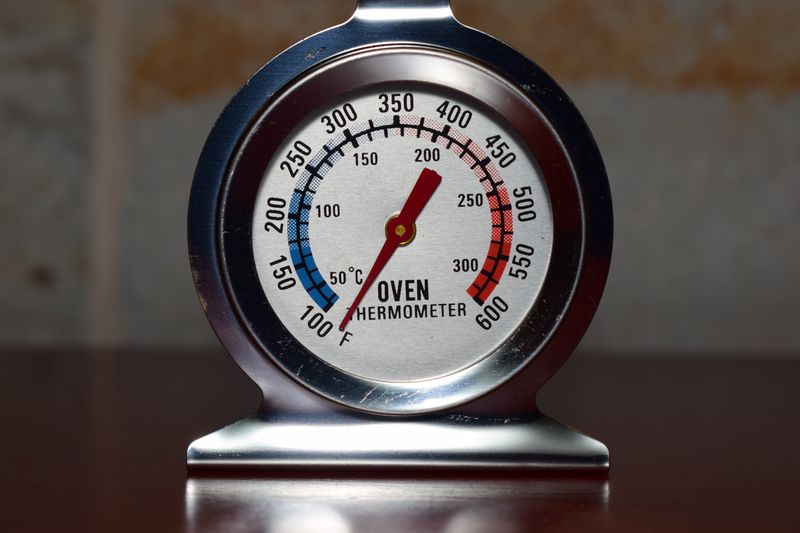
Which is why chocolate work is done with dry equipment, gentle heat and a thermometer that is trusted more than the appearance of the bowl.
Questions readers ask
Does altitude affect pastry as much as cake?
Much less, since pastry relies on steam and fat rather than on chemical leavening holding a delicate structure. The main effect is faster drying, which can be countered with a slightly wetter dough.
Is there one adjustment that helps most?
Reducing the chemical raising agent is usually the single most effective change for cakes. It directly addresses the over-expansion that causes the collapse.
Also by Gaurav Bhattacharya
- Baker's percentages let you rescale, compare and diagnose any recipeBaking Science
- Amylase, falling number and why bakers add malt to flourBaking Science
- A set of one gram scales is the cheapest upgrade in the kitchenTins & Tools
- Your oven dial is a suggestion and a cheap thermometer proves itTins & Tools