Tins & Tools
A Cookie Scoop Is A Timing Tool In Disguise
Portioning dough by volume makes every cookie on the sheet the same mass, which is the only way a single bake time can be correct for the whole batch.

A spring-loaded scoop looks like a neatness tool. What it actually controls is bake time, because cookies of different sizes cannot be done at the same moment.
Mass decides when a cookie is finished
A larger portion of dough takes longer for heat to reach its center and longer for its moisture to fall to the level that sets the crumb.
On a sheet of hand-dropped dough, portions can vary considerably. The small ones are dry before the large ones have set.
A single timer is then wrong for most of the tray, and the batch is judged on whichever size is most common.
Spread is proportional and makes the gap worse
Cookie dough spreads as its fat melts, and a larger ball spreads further. The result is not just a bigger cookie but a differently shaped one.
Thin edges on a large spread cookie brown well before its thick center is cooked, which widens the range of doneness on one sheet.
Uniform portions spread uniformly, so edges and centers across the tray reach the same state together.
Scoops are sized by a numbering convention
Disher sizes are numbered by how many level scoops fill a quart, so a higher number means a smaller scoop. The numbering runs backward from intuition.
That convention comes from commercial kitchens and is stamped on the release lever rather than printed as a volume.
Knowing which number a recipe used, or recording the one you used, makes a cookie recipe reproducible in a way that a spoon description never is.
Weighing is more accurate and slower
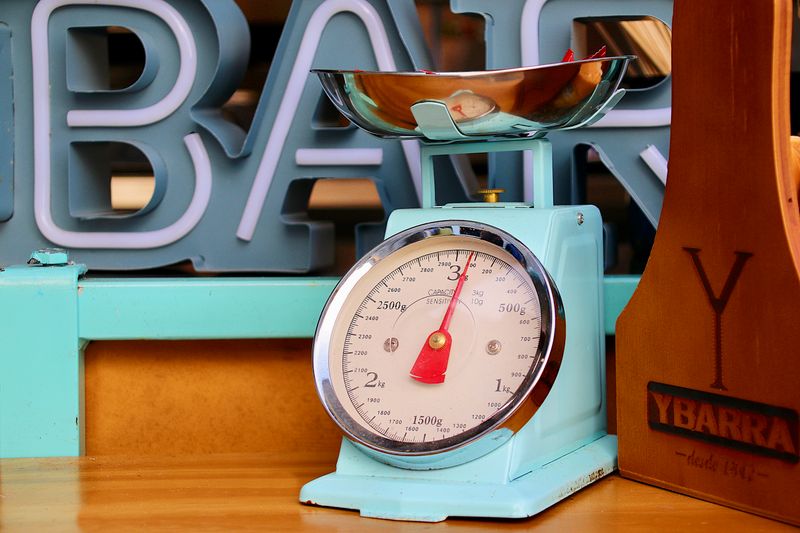
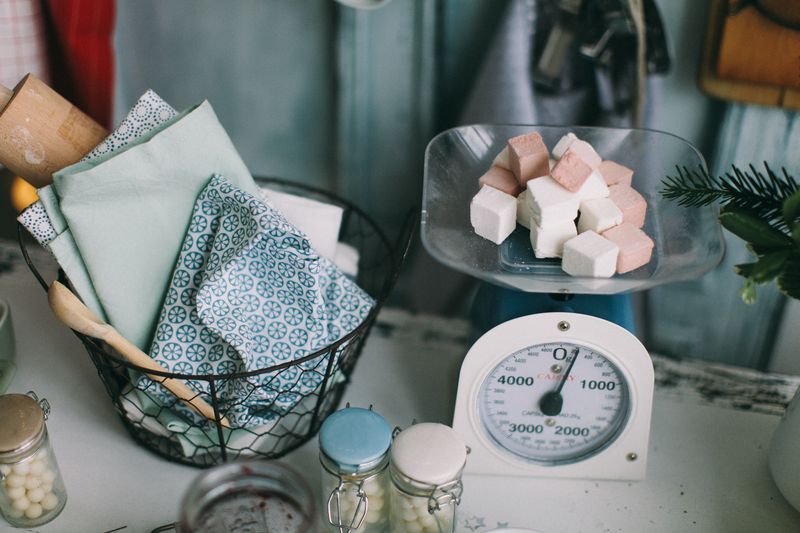
A scale portions by mass directly, which removes the error introduced by how tightly the dough is packed into the scoop.
For sticky or aerated doughs the difference is real, since packing varies more when the dough resists.
For most cookie doughs the scoop is close enough and far faster, which is why bakeries portioning hundreds of pieces use one rather than a scale.
The scale earns its place on doughs where a few grams change the result, and on laminated or enriched pieces where consistency across a batch is judged closely.
Consistent portions also fix the pan layout
Equal balls can be spaced with equal gaps, which means every cookie has the same amount of hot air around it.
Crowding one area of the sheet creates a humid pocket where cookies stay pale, while an isolated cookie at the corner browns faster on every side.
Uniform size and uniform spacing together remove two of the three reasons one tray of cookies comes out looking like several different recipes.
Questions readers ask
Can I use unglazed quarry tiles instead?
Many people do, and they work reasonably well for the price. Choose unglazed tiles rated as food safe, leave gaps for air, and accept that they are more fragile than a purpose-made stone.
Is a steel worth it if I only bake bread in a pot?
Less so, since the pot already gives you excellent heat transfer and steam retention. It still helps by stabilising the oven, but the marginal gain on the loaf itself is small.
Also by Gaurav Bhattacharya
- Baker's percentages let you rescale, compare and diagnose any recipeBaking Science
- Altitude changes every leavened recipe, and pressure is the reasonBaking Science
- Amylase, falling number and why bakers add malt to flourBaking Science
- A set of one gram scales is the cheapest upgrade in the kitchenTins & Tools