Tins & Tools
A Cup Of Flour Is A Range, Not A Measurement
Scooping compacts flour unpredictably, so the same cup can hold substantially different weights, which is why volume measures cause more baking failures than any other habit.

Volume measurement works acceptably for liquids and badly for flour. The reason is that flour is compressible and its packing density is set by how it was handled.
Flour occupies whatever space it is given
Flour particles are small, irregular and hold air between them. Undisturbed in a bag, that air is squeezed out and the flour settles denser.
Sifted or freshly stirred flour holds far more air, and the same cup then contains noticeably less actual flour.
The difference between the lightest and heaviest way of filling a cup is large enough to change a recipe's hydration substantially.
How you fill the cup is the variable
Dipping the cup into the bag and pulling it out compacts the flour against the walls, giving the heaviest result and the most variable one.
Spooning flour into the cup and levelling the top gives a lighter and more consistent fill, which is what most recipes written in cups assume.
Since the recipe cannot tell which method the reader used, a cup-based recipe carries an unavoidable margin that no amount of care removes.
The error compounds through the recipe
A batter with too much flour is stiff and dry, and it bakes tough and pale because there is less water to carry heat and less sugar in proportion.
A bread dough with too much flour is under-hydrated, and the baker responds by adding water, which changes the whole formula from the recipe as written.
Because the error is invisible until the bake, it is usually blamed on the oven or the technique rather than on the measurement.
Scales remove the variable entirely
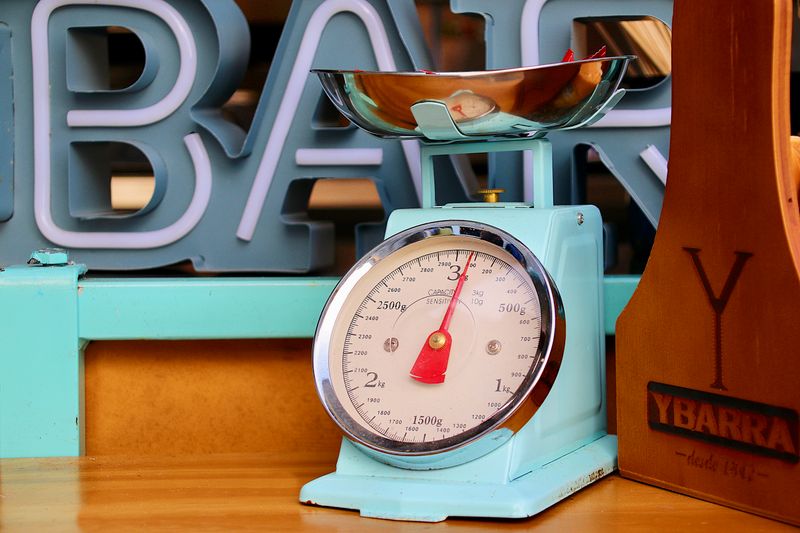
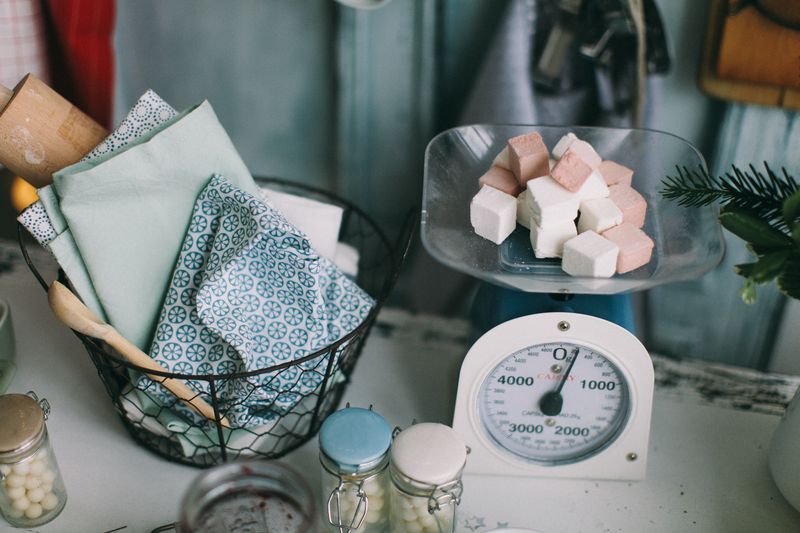
A gram is a gram regardless of how the flour was handled, so weighing eliminates packing density as a source of error.
It also reduces washing up, since ingredients can be weighed successively into one bowl with the scale zeroed between them.
Small quantities need appropriate resolution, and a scale reading in whole grams is imprecise for salt and yeast in a small batch.
Where volume is still fine
Liquids are not compressible, so a measured volume of water or milk is reliable and converting it to weight gains nothing.
Spoon measures for leavening and spices are conventional and work well enough, since the quantities are small and consistently scooped.
The problem is specific to bulky dry ingredients that trap air, which means flour above all, and also icing sugar, cocoa and desiccated coconut.
Questions readers ask
Can I use unglazed quarry tiles instead?
Many people do, and they work reasonably well for the price. Choose unglazed tiles rated as food safe, leave gaps for air, and accept that they are more fragile than a purpose-made stone.
Is a steel worth it if I only bake bread in a pot?
Less so, since the pot already gives you excellent heat transfer and steam retention. It still helps by stabilising the oven, but the marginal gain on the loaf itself is small.
Also by Gaurav Bhattacharya
- Baker's percentages let you rescale, compare and diagnose any recipeBaking Science
- Altitude changes every leavened recipe, and pressure is the reasonBaking Science
- Amylase, falling number and why bakers add malt to flourBaking Science
- A set of one gram scales is the cheapest upgrade in the kitchenTins & Tools