Tins & Tools
A Half Sheet Pan Is Sized To The Oven, Not To The Recipe
The standard American sheet pan is a fraction of a commercial bakery sheet, and its dimensions come from rack width and oven clearance rather than from any recipe.

The rimmed metal pan in most American kitchens is a half sheet, and its dimensions were set by commercial equipment. Understanding where the size came from explains several of its quirks.
The sizes are fractions of one original
Commercial bakeries work from a full sheet pan sized to fit professional rack ovens. The half, quarter and eighth sheets are literal divisions of it.
A full sheet does not fit a domestic oven, which is why the half sheet became the household default rather than being designed for home use.
That inheritance is why the dimensions are awkward numbers rather than round ones, and why two quarter sheets occupy the same footprint as one half.
Airflow needs the clearance the pan leaves
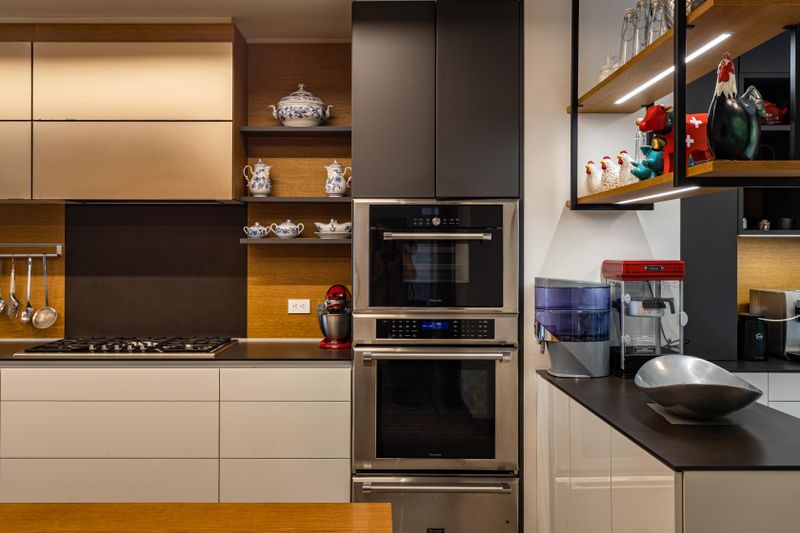
A half sheet leaves a gap around itself on a standard oven rack. That gap is where hot air moves between the upper and lower parts of the cavity.
Filling the rack edge to edge, or placing a pan on a solid baking steel, blocks that circulation and changes how the whole oven behaves.
It is a common cause of a bake browning well on the bottom and poorly on top, with no change to the recipe or the dial.
Gauge matters more than coating
Thin pans warp when heated because the metal expands unevenly, and a warped pan lifts off the rack in one place and touches in another.
That produces the familiar batch where cookies at one corner are done and at the opposite corner are pale, which reads as an oven problem and is not.
Heavier aluminum resists warping and spreads heat laterally, which is the practical difference between a pan that lasts and one that buckles audibly in the oven.
The rim is structural and it costs you
The rolled rim stiffens the pan and gives it something to hold its shape against. It is why rimmed pans warp less than flat cookie sheets.
It also blocks air from reaching the edges of what is on the pan, which is why a rimless sheet browns cookies more evenly around the perimeter.
For anything that releases liquid, the rim is not optional, and the small penalty in airflow is the price of not having syrup on the oven floor.
Color changes the bake more than the brand does
A dark pan absorbs radiant heat and transfers it to whatever sits on it, browning bottoms faster than a bright aluminum pan at the same setting.
Nonstick coatings are usually applied to dark substrates, which is why nonstick sheets are so often associated with dark bottoms.
Bakers who own both quickly learn to treat them as two different tools rather than as one pan with a convenient surface.
Questions readers ask
Can I use unglazed quarry tiles instead?
Many people do, and they work reasonably well for the price. Choose unglazed tiles rated as food safe, leave gaps for air, and accept that they are more fragile than a purpose-made stone.
Is a steel worth it if I only bake bread in a pot?
Less so, since the pot already gives you excellent heat transfer and steam retention. It still helps by stabilising the oven, but the marginal gain on the loaf itself is small.
Also by Gaurav Bhattacharya
- Baker's percentages let you rescale, compare and diagnose any recipeBaking Science
- Altitude changes every leavened recipe, and pressure is the reasonBaking Science
- Amylase, falling number and why bakers add malt to flourBaking Science
- A set of one gram scales is the cheapest upgrade in the kitchenTins & Tools