Tins & Tools
Air Fryers And Countertop Ovens Bake Small, Fast And Unevenly
A small cavity with a strong fan concentrates airflow and reaches temperature quickly, which suits some bakes and ruins others by setting surfaces before centres cook.

Compact ovens have become common, and they bake genuinely differently from a full-size oven rather than simply smaller. The cavity size drives most of it.
A small cavity heats and loses heat quickly
Less air and less metal means far less thermal mass, so a countertop oven reaches temperature in a fraction of the time a large one needs.
The same low mass means the temperature drops sharply when the door opens and when cold food goes in, and recovery is abrupt rather than gradual.
The result is a cycling temperature with wider swings than a large oven produces, which matters for anything that sets slowly.
The fan is proportionally much stronger
An air fryer is a small convection oven with a powerful fan, and in a small cavity that produces air speeds far higher than a domestic fan oven.
Fast-moving air strips moisture from surfaces quickly, which is why these machines excel at crisping and browning the outside of things.
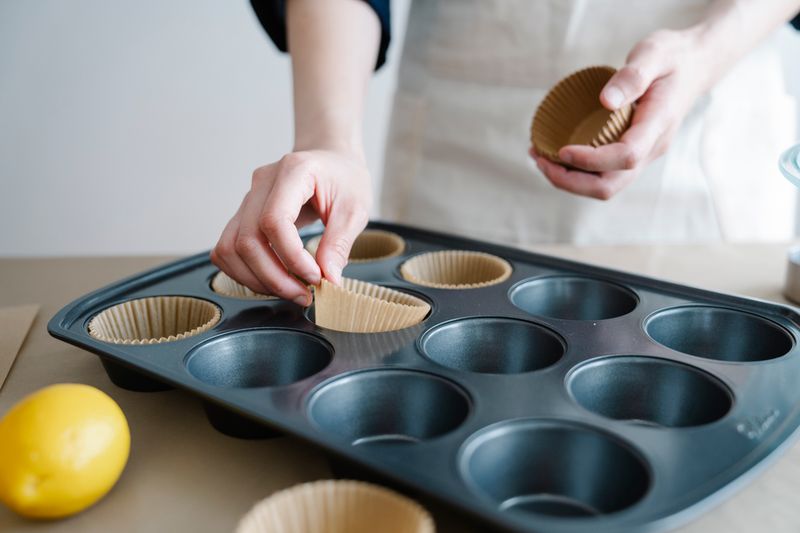
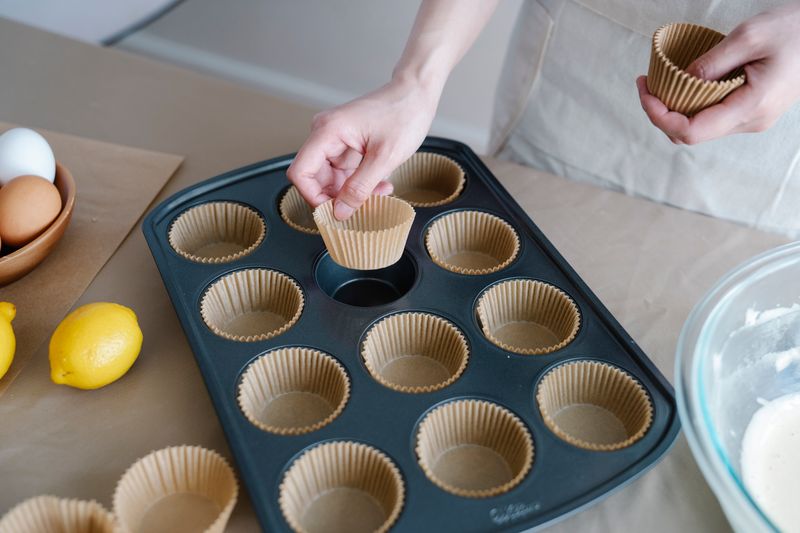
It also lifts anything light. Parchment, loose toppings and unweighted paper cases are blown around unless they are held down.
Elements sit very close to the food
In a shallow cavity the heating element may be only a few centimetres above the surface of the bake, so radiant heat is intense.
Surfaces therefore colour long before centres are cooked, which is the characteristic failure with anything more than a couple of centimetres deep.
Lowering the set temperature and covering the top part way through both help, and neither is usually mentioned in recipes written for full-size ovens.
What these ovens are genuinely good at
Small, thin, quick items suit them well: biscuits, scones, rolls, small tarts and anything where a crisp exterior is the goal.
Reheating and refreshing baked goods is another strength, since fast dry heat restores crust without the long preheat a full oven needs.
They are also efficient for single portions, where heating a large cavity for one small item is wasteful.
What they handle badly
Tall cakes, rich fruit mixtures and anything needing a long gentle bake are poorly served, because the surface cannot survive the time the centre needs.
Delicate foams suffer from the airflow, which can distort a rising cake and skin a surface before it has finished expanding.
Batch consistency is also limited, since the small shelf area means crowding, and crowded trays in a strong fan bake very unevenly indeed.
Questions readers ask
Can I use unglazed quarry tiles instead?
Many people do, and they work reasonably well for the price. Choose unglazed tiles rated as food safe, leave gaps for air, and accept that they are more fragile than a purpose-made stone.
Is a steel worth it if I only bake bread in a pot?
Less so, since the pot already gives you excellent heat transfer and steam retention. It still helps by stabilising the oven, but the marginal gain on the loaf itself is small.
Also by Gaurav Bhattacharya
- Baker's percentages let you rescale, compare and diagnose any recipeBaking Science
- Altitude changes every leavened recipe, and pressure is the reasonBaking Science
- Amylase, falling number and why bakers add malt to flourBaking Science
- A set of one gram scales is the cheapest upgrade in the kitchenTins & Tools