Tins & Tools
Controlling dough temperature without buying a proving cabinet
Fermentation is a temperature problem, and every solution to it is really just a way of holding a small volume of air steady for a few hours.

This works through improvising a proving environment in the order the parts actually depend on each other.
The short version
- A water bath holds temperature far more steadily than air.
- An oven with the light on often sits around 25 to 30C.
- Measure the space before trusting it.
Why air is a poor medium
Air has very little heat capacity, so a box of warm air cools quickly and swings with every door opening. A dough sitting in that air will drift steadily toward room temperature over a three hour bulk.
That drift is why a dough measured at 26C after mixing might average 22C across the whole fermentation. Any improvised proving setup should therefore be judged on stability rather than on peak temperature. Measuring the space with a thermometer over an hour tells you more than any recommendation can.
Water baths
Water holds far more heat per degree than air, so a tub of water at 26C stays close to 26C for hours. Standing your dough container in a larger tub of water gives excellent stability for almost no cost. Top up with a kettle occasionally if the room is cold, checking with a thermometer rather than guessing.
Make sure the dough container floats or sits stably, since a tipped tub of wet dough is a bad afternoon. This is the single most effective improvisation available and it uses equipment everyone owns.
The oven with the light on
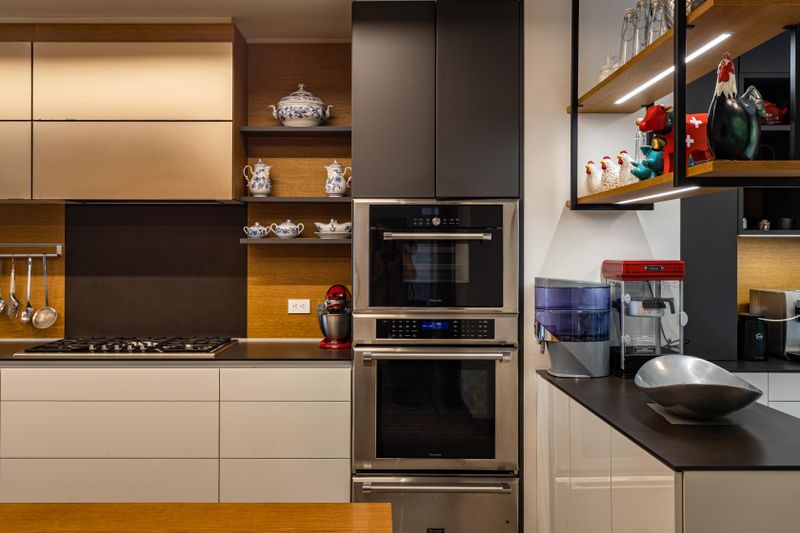
Many ovens sit somewhere around 25 to 30C with only the interior bulb running, which is often close to ideal. LED bulbs produce far less heat than the old incandescent ones, so newer ovens may barely warm at all.
Measure yours over an hour before relying on it, since the range between models is enormous. A bowl of hot water in the oven alongside the dough adds both warmth and humidity. Leave a note on the oven door, because preheating an oven with dough inside it is a common and expensive mistake.
Insulated boxes and bags
A cool box works in reverse, holding warmth in rather than out, with a jar of hot water as the heat source. A cardboard box lined with towels does much the same for a couple of hours. Both are easy to overheat, so start with less hot water than you think and measure the result.
Anything above about 30C pushes fermentation faster than most home bakers can track.
The goal is steady and slightly warm rather than as hot as possible.
Cooling things down
In a hot climate the problem reverses and the challenge is keeping dough below 26C. Chilled or iced water at mixing is the main lever, and it can be calculated for deliberately. A short spell in the fridge partway through bulk pulls the temperature back without stopping fermentation.
Once the crumb sets, working early in the morning is a legitimate and traditional solution in hot regions. Reducing the starter or yeast quantity slows things independently of temperature and is often the simplest fix.
Domestic ovens routinely run twenty degrees off their dial, so trust a thermometer over the setting.
Knowing what you have
Put a cheap digital thermometer with a probe wherever you prove and leave it there permanently. Record the temperature alongside your bulk times and you will build a personal chart within a few bakes. That chart is worth more than any published timing, because it describes your actual kitchen.
Seasonal drift is real, so expect summer and winter numbers to differ substantially. Once you know your own environment, a proving cabinet becomes a convenience rather than a necessity.
The takeaway
Use water rather than air to hold the temperature, and measure the space before you trust it.
Patience is an ingredient, and it is the one people leave out.
Questions readers ask
Is a purpose-made proving box worth buying?
Only if you bake very regularly and want repeatable results without thinking about it. A water bath achieves most of the benefit for the price of a plastic tub.
Can I prove dough in a microwave with a cup of hot water?
Yes, and it is a reasonable improvised insulated box. Put a note on the door, since a dough accidentally microwaved is a memorable failure.
Also by Gaurav Bhattacharya
- Baker's percentages let you rescale, compare and diagnose any recipeBaking Science
- Altitude changes every leavened recipe, and pressure is the reasonBaking Science
- Amylase, falling number and why bakers add malt to flourBaking Science
- A set of one gram scales is the cheapest upgrade in the kitchenTins & Tools