Pastry
A laminated yeast dough is fermenting and layering at the same time
Croissants and Danish pastries ask one dough to do two jobs whose ideal conditions directly contradict each other, which is why the schedule is so unforgiving.

This is written to be used rather than admired. Each section below is a decision about laminated yeast doughs, and each one has a default.
Before you start
- Lamination needs cold and fermentation needs warmth.
- Fermentation continues slowly even in the fridge.
- Total elapsed time matters as much as any single step.
The contradiction at the centre
Butter has to stay firm and pliable for the layers to survive rolling, which means the dough must be kept cold. Yeast works slowly in the cold, so the dough is fermenting throughout the process at a rate you cannot see. If you work slowly enough to keep the butter perfect, the dough may overferment before you finish.
If you work fast enough to protect the fermentation, the butter warms and the layers merge. Every professional schedule for these doughs is an attempt to resolve that conflict rather than a set of arbitrary steps.
What the dough is before lamination
The base dough is a lean to moderately enriched yeasted dough, developed only partly rather than fully. Underdeveloping it on purpose leaves room for the gluten to strengthen during the rolling and folding to come. A fully kneaded dough fights the rolling pin, springs back constantly and tears the butter layer as it resists.
The dough is chilled thoroughly before the butter goes in, so the two are at a similar firmness. Matching the firmness of dough and butter is the single most useful thing to get right before the first fold.
Managing time in the fridge
Chilling between folds serves two purposes, firming the butter and relaxing the gluten you have just worked. It also slows but does not stop fermentation, so the dough keeps ageing while it rests.
A dough that spends far too long chilled between folds can overferment quietly and behave badly at proving. Long chilling also dries the surface, so wrapping matters as much as the temperature does. Your recipe will give resting periods that balance these, and shortening them is usually worse than lengthening them slightly.
Why the final proof is the hardest step
The dough must be warm enough for the yeast to work but cool enough that the butter does not melt out of the layers. That window is narrow, and it is narrower still with butter than with the specialised fats used commercially.
Once the crumb sets, too cold, and the pastries proof so slowly that they go into the oven underproved and dense. Too warm, and butter leaks onto the tray before baking, which removes the layers you spent two days building.
A cool, draught-free spot and patience beat any attempt to speed things up with heat.
Reading a proved laminated pastry
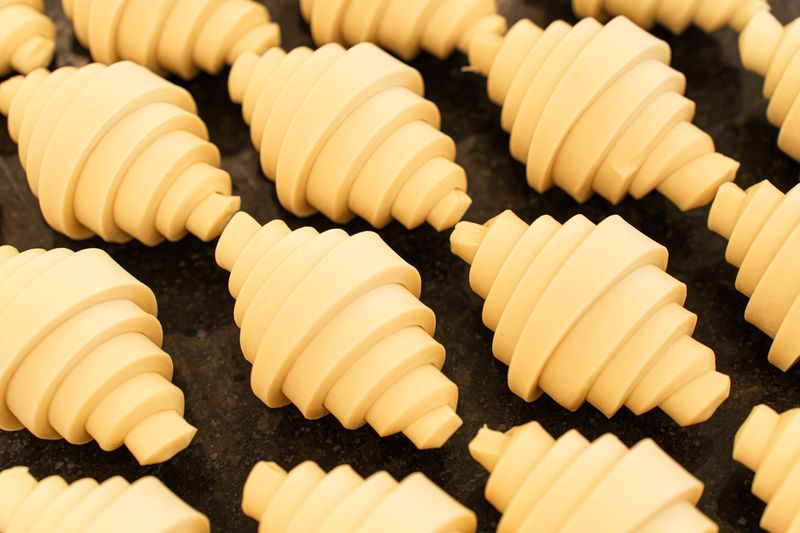
A properly proved croissant is visibly larger, jiggles as a whole when the tray is nudged and shows the layers at the cut ends. An underproved one feels firm and dense and bakes into something closer to a bread roll with a greasy base.
Weighed out, an overproved one looks fragile, may already be leaking butter and collapses when moved. Judging by feel and appearance rather than by clock is essential, since kitchen temperature changes everything. Once you have seen a correctly proved batch, the comparison becomes far easier to make.
Where home bakers usually lose it
Rushing the chill between folds is the most common error, and it shows up as merged layers rather than distinct ones. Rolling too thin too early stretches the butter beyond what it can survive and breaks the layers.
By the second rise, trying to complete the whole process in one day compresses every rest and stacks the errors. Proving in a warm oven with hot water is the classic way to melt butter out of the pastries before baking. Spreading the work across two days, with an overnight rest, solves more of these problems than any technique change.
The takeaway
Keep the butter cold, keep the total time honest, and accept that the schedule is the recipe.
Bake it badly once on purpose. The failure teaches more than the photograph.
Questions readers ask
Can I make croissants entirely in one day?
You can, but every rest becomes the minimum rather than the comfortable option and the margin for error disappears. Splitting the work across two days is easier and generally gives better results.
Does a laminated dough need a bulk fermentation before lamination?
Recipes differ, and many give the dough only a short rest before chilling, relying on the long cold stages for flavour. A long warm bulk before lamination usually leaves too little fermentation capacity for the final proof.