Pastry
Gluten-Free Pastry Is Easier Than Gluten-Free Bread
Shortcrust wants as little gluten as possible in the first place, so removing wheat costs pastry far less structure than it costs a loaf that depends on the network.
Bakers who struggle with gluten-free bread are often surprised by how well gluten-free pastry works. The reason is that pastry was never relying on gluten much.
Shortcrust is built on fat and starch
The defining quality of shortcrust is shortness, which comes from fat coating flour particles and preventing them from bonding to each other.
Gluten in shortcrust is a nuisance to be minimised, which is why the flour is barely worked, the water is kept low and the pastry is rested.
Removing gluten entirely removes the thing every shortcrust technique is designed to suppress, so the goal and the constraint now agree.
What gluten was still contributing
Some gluten is needed to hold the pastry together as a sheet that can be lifted, rolled and moved into a tin without disintegrating.
Gluten-free pastry is therefore fragile when raw and tends to crack at the edges as it is rolled rather than stretching.
A small quantity of gum, or an egg, restores enough cohesion to handle it, and neither compromises the shortness in the way extra gluten would.
Handling changes more than the recipe
Rolling between two sheets of parchment solves most of the fragility, since the pastry never has to support itself while being moved.
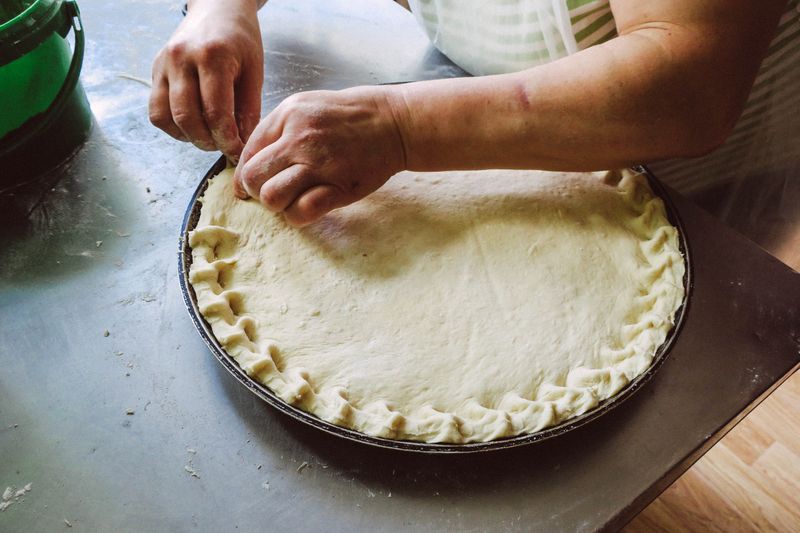
Pressing the pastry directly into the tin with fingertips is a legitimate alternative and is often more reliable than rolling for a small case.
Cracks can simply be patched, because there is no gluten network to be damaged by rework and no toughening penalty for handling it twice.
Shrinkage largely disappears
Wheat pastry shrinks in the tin because stretched gluten contracts when heated, pulling the case down the sides.
With no gluten there is nothing to contract, so a gluten-free case holds the shape it was pressed into far more reliably.
It can still slump if the fat softens before the structure sets, which is why chilling the lined tin before baking still matters.
Laminated pastry is the hard case
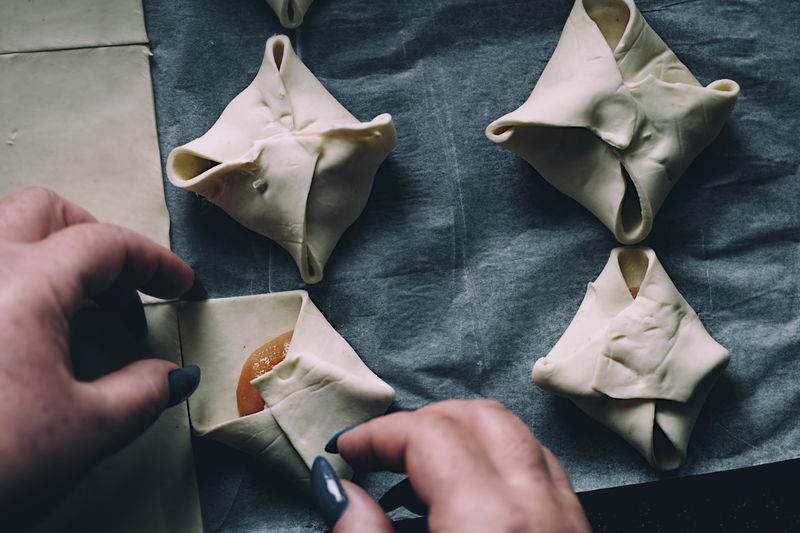
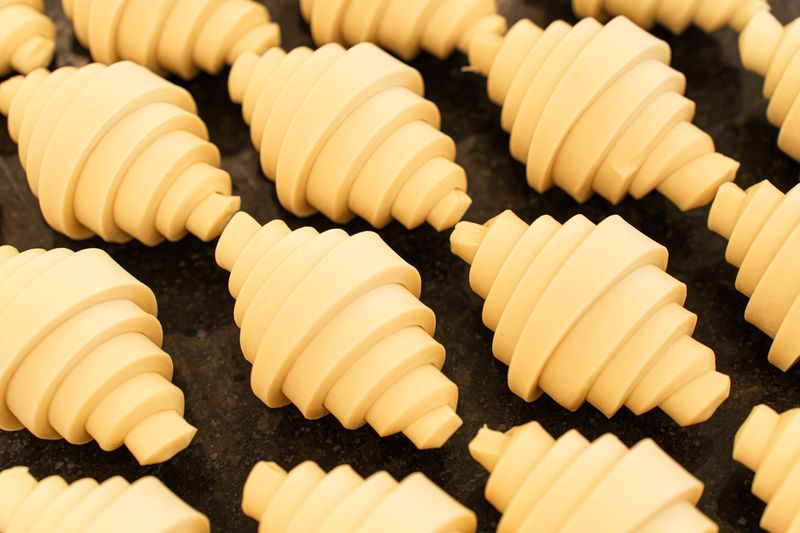
Puff and croissant doughs depend on gluten sheets strong enough to be rolled repeatedly and to contain expanding steam without tearing.
Gluten-free versions exist but rely heavily on gums to imitate that extensibility, and they are considerably less tolerant of handling.
The gap between the two is a useful guide to the whole subject: the more a pastry depends on being stretched, the more gluten is genuinely required.
Questions readers ask
Can I make croissants entirely in one day?
You can, but every rest becomes the minimum rather than the comfortable option and the margin for error disappears. Splitting the work across two days is easier and generally gives better results.
Does a laminated dough need a bulk fermentation before lamination?
Recipes differ, and many give the dough only a short rest before chilling, relying on the long cold stages for flavour. A long warm bulk before lamination usually leaves too little fermentation capacity for the final proof.