Pastry
Hand Pies Leak Where The Seal Was Made Warm
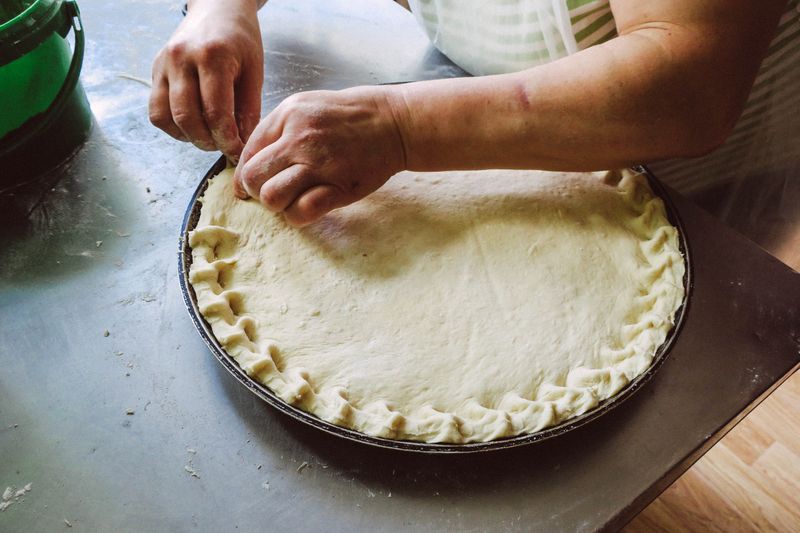
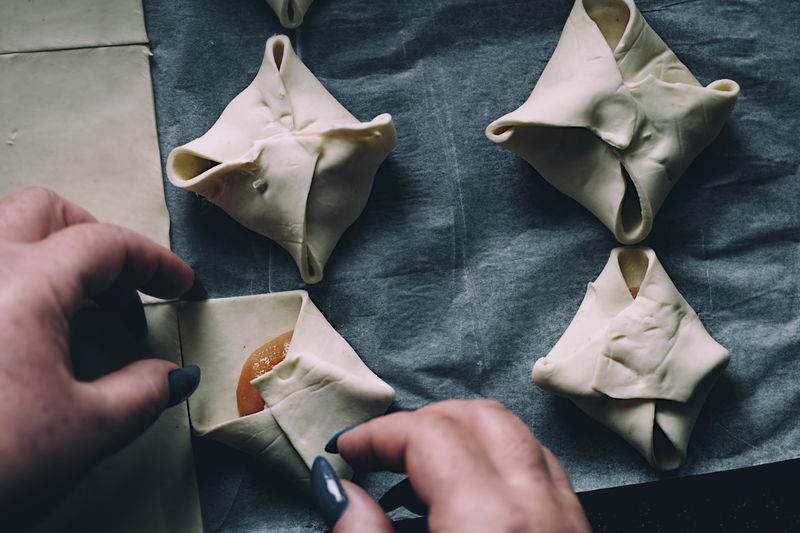
A crimped edge holds only if the two layers of pastry actually bonded, and warm dough, dry edges or a wet filling each prevent that bond from forming.

A hand pie that bursts in the oven almost always failed at the seam rather than in the middle. The seal was never a bond, only two pieces of pastry pressed together.
A seal is adhesion between two dough surfaces
Pastry sticks to pastry when the exposed starch and protein at each surface come into contact with enough moisture and pressure to join.
A dry edge cannot do this. The two layers sit against each other and separate as soon as internal pressure builds.
Which is why recipes call for brushing the rim with water or egg. The liquid is glue, not decoration.
Warm fat prevents the bond entirely
If the dough has warmed enough for its butter to soften, the surface of the pastry is coated in fat rather than in hydrated flour.
Fat does not bond to fat under finger pressure. The crimp holds its shape and has no strength behind it.
Chilling the assembled pies before baking firms that fat again, but it does not create a bond that failed to form during the crimping.
Steam pressure builds fast inside a sealed pocket
A filling heats and releases steam within an enclosed shell. That steam has nowhere to go and pushes outward on every surface.
The seam is the weakest part of the shell, so pressure finds it first and opens it wherever the bond is thinnest.
Cutting vents in the top gives the steam a low-resistance exit, which lowers the pressure the seam has to withstand for the whole bake.
Wet fillings undermine the seal from inside
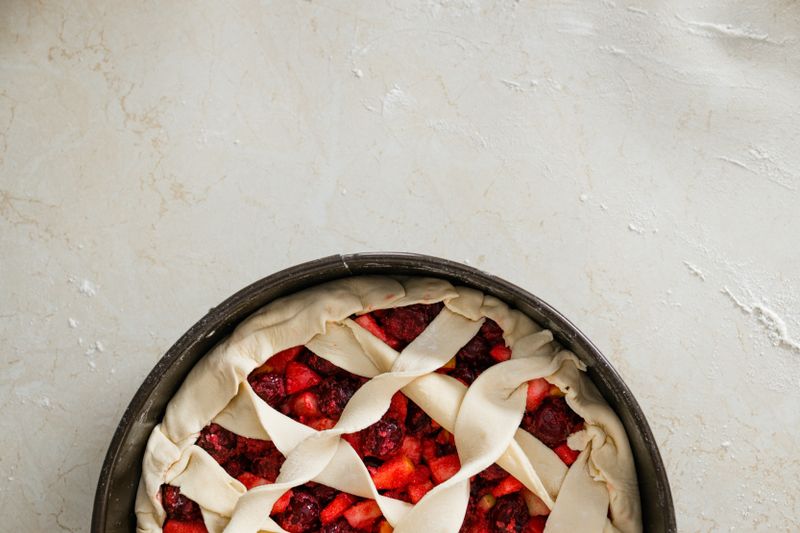
A juicy fruit filling releases liquid as it heats, and that liquid runs to the lowest point, which is the sealed edge.
Liquid between the layers pushes them apart and cooks into steam directly at the weak point.
Thickening the filling with starch before it goes in, and cooling it fully, keeps the liquid bound during the critical early minutes of the bake.
Overfilling is the most common single cause
A generous filling leaves too little dry margin for a real seal, and the crimp ends up made partly on filling rather than on pastry.
It also increases the volume of steam generated inside a shell that has not gained any strength to hold it.
The working margin looks stingy on the bench and disappears once the pie is closed, which is why experienced bakers underfill and get away with it.
Crimping with a fork rather than fingers helps here as well, since the tines press the two layers thin at the edge and increase the contact area of the bond.
Questions readers ask
Can I make croissants entirely in one day?
You can, but every rest becomes the minimum rather than the comfortable option and the margin for error disappears. Splitting the work across two days is easier and generally gives better results.
Does a laminated dough need a bulk fermentation before lamination?
Recipes differ, and many give the dough only a short rest before chilling, relying on the long cold stages for flavour. A long warm bulk before lamination usually leaves too little fermentation capacity for the final proof.