Bread
A Soft Pretzel Needs An Alkaline Bath Before The Oven
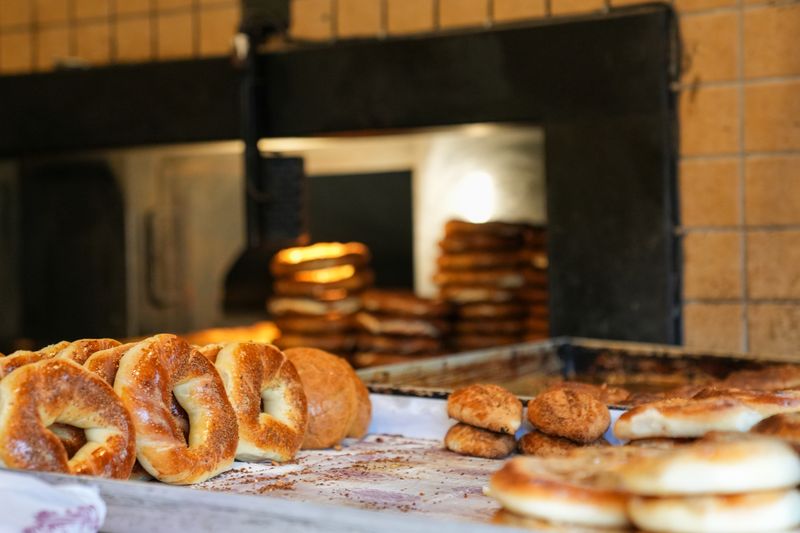
The dip that gives a mall pretzel its mahogany skin is chemistry, not color: alkalinity accelerates browning and sets a thin, distinct crust in the oven.

A soft pretzel gets its dark, glossy, faintly bitter skin from a brief dip in an alkaline solution before baking. Without that step the same dough bakes into a plain roll.
Alkalinity speeds the browning reaction
The browning that produces color and flavor on a crust runs faster as pH rises. Raising the surface pH does not add color; it lets the reaction proceed further in the time available.
The dough underneath is unchanged. Only the outer fraction of a millimeter is affected, which is why the interior stays pale and soft while the skin goes mahogany.
That contrast between a very dark surface and an unbrowned crumb is the visual signature of the process. Nothing achievable with egg wash or oven temperature reproduces it.
Lye and baked soda are the same idea at two strengths
Commercial bakeries use a dilute food-grade lye solution, which is strongly alkaline and gives the fullest effect. It is a caustic material and is handled with gloves and care.
Home recipes commonly substitute baking soda, sometimes baked in a low oven first to drive off carbon dioxide and convert it to a more alkaline compound.
The substitute works, but less strongly, so home pretzels tend toward a lighter brown and a milder skin. The difference is one of degree rather than a different mechanism.
The chew comes from a stiff, low-hydration dough
Pretzel dough carries far less water than a sandwich loaf. A stiff dough produces a tight crumb with small cells and very little openness.
That density is what gives the pull and chew people associate with a pretzel. A wetter dough with the same bath would still brown but would eat like bread.
Because the dough is stiff, it is usually mixed longer or rested to let the flour hydrate. Rolling a dry dough into ropes without rest fights back and springs shorter every pass.
The bath sets a skin before the oven can lift it
Dipping also gelatinizes starch at the surface, which firms the exterior before it goes into the heat. The pretzel therefore expands less than an untreated dough would.
That restraint is part of the shape holding. The loops stay defined instead of puffing into each other, and the scored belly opens along the cut rather than randomly.
Salt applied after the dip sticks to that tacky surface and stays through the bake. On a dry dough the crystals fall off in the pan.
They are sold warm because they do not keep
A thin crust over a dense, low-fat crumb goes leathery quickly. The skin softens as moisture migrates outward and the interior firms as its starch recrystallizes.
Stands in ballparks and shopping malls hold pretzels in warm, humid cabinets precisely to delay both halves of that. It is a holding strategy, not a cooking one.
Reheating at home works for the same reason it works on a biscuit: heat restores flexibility to the crust before the crumb has time to dry further.
Questions readers ask
How long does it take to build a starter from scratch?
Usually seven to fourteen days at room temperature, with an early burst of activity around day two or three that is not the yeast you want. That false start settles down before the real culture establishes.
Does it matter what water I use?
In most places tap water is fine. If your supply is heavily chlorinated, letting it stand uncovered for an hour or using filtered water removes an obstacle at no cost.