Bread
Boiling A Bagel Sets The Crust Before The Oven Can Lift It
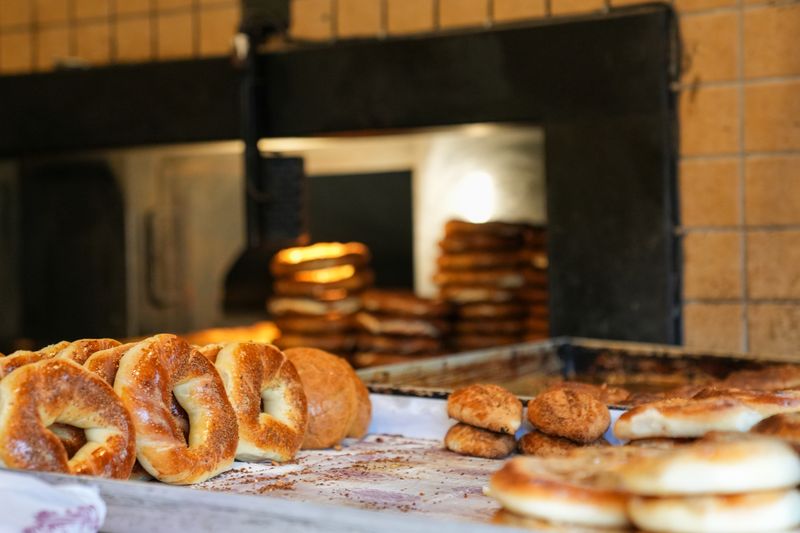
A bagel is boiled so its outside gelatinises and fixes in place, which caps oven spring, thickens the skin and produces the dense chew the shape is known for.

A bagel is the only common bread that is cooked twice in two different mediums, and the short boil is what separates it from a bread roll. The boil decides the crust, the shine and most of the texture.
What the water does to the surface
Dropping a shaped bagel into rolling water heats the outer few millimetres almost instantly. The starch there gelatinises and the surface proteins set while the interior is still cool and raw.
That sets a skin. Once starch has swollen and locked into a continuous layer, the surface can no longer stretch the way an unboiled dough surface stretches in the first minutes of a bake.
The skin also traps its own moisture, which is why a boiled bagel goes into the oven wet and stays glossy rather than drying out into a matte, floury crust.
Why the crumb ends up dense
Oven spring depends on gas expanding inside a dough whose surface can still give. A bagel's surface has already been fixed, so the expansion has far less room to work with.
The gas still expands, but it pushes against a set skin and mostly compresses the crumb rather than inflating it. The result is a tight, close texture instead of an open one.
Bagel dough is usually made stiff and low in water to begin with, so the two effects compound. A slack dough boiled the same way would still come out denser than its baked-only equivalent.
The additives in the water are not decoration
Malt, honey or sugar in the boiling water leave a thin sweet film on the surface, and that film browns quickly once the bagel meets dry oven heat.
Alkaline additions work differently. Raising the pH of the water speeds browning reactions and gives the darker, faintly savoury crust associated with pretzels and with some bagel traditions.
Either way the additive works on the outside only. It never penetrates the set skin, so it changes colour and surface flavour without touching the crumb.
Boil time is a dial, not a rule
A short dip sets a thin skin and allows a little more rise, giving a puffier bagel with a softer bite and a lighter colour.
A longer boil thickens that skin considerably. The bagel rises less, the crust becomes leathery and chewy, and the surface can start to wrinkle as it cools.
Most bakers settle on a short time per side and adjust from there. The variable is worth testing deliberately, because it changes the finished bagel more than any change to the dough.
Why the bagels are chilled first
Shaped bagels are usually held cold overnight before boiling. The cold slows fermentation so the dough can develop flavour without the gas structure becoming fragile.
A cold, firm bagel also holds its ring shape in turbulent water. A warm, fully proofed one deforms on contact and can lose its hole entirely during the boil.
The float test comes from the same logic. A bagel that floats has enough gas to survive the boil, and one that sinks needs longer before it is ready to meet the water.
Questions readers ask
How long does it take to build a starter from scratch?
Usually seven to fourteen days at room temperature, with an early burst of activity around day two or three that is not the yeast you want. That false start settles down before the real culture establishes.
Does it matter what water I use?
In most places tap water is fine. If your supply is heavily chlorinated, letting it stand uncovered for an hour or using filtered water removes an obstacle at no cost.