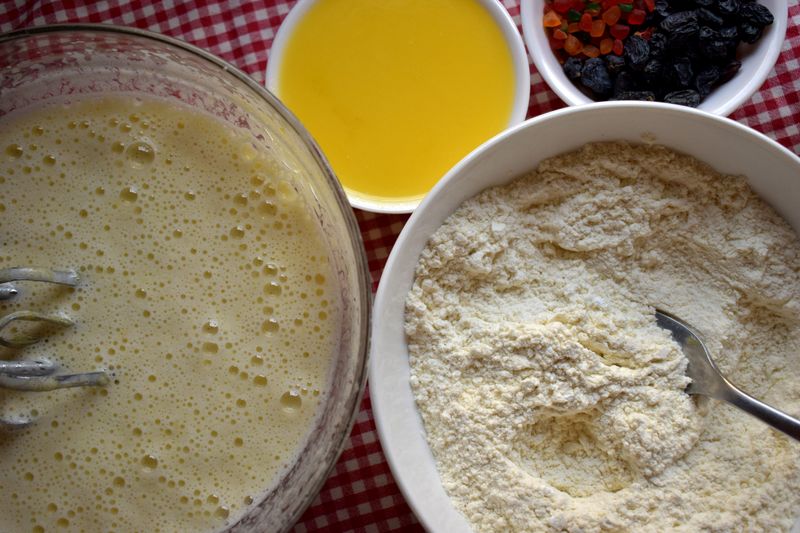
Cakes & Sponges
Acid in a cake batter is doing three jobs at once
Buttermilk, treacle, yoghurt and brown sugar are not there only for flavour, and swapping them out changes rise, colour and texture together.
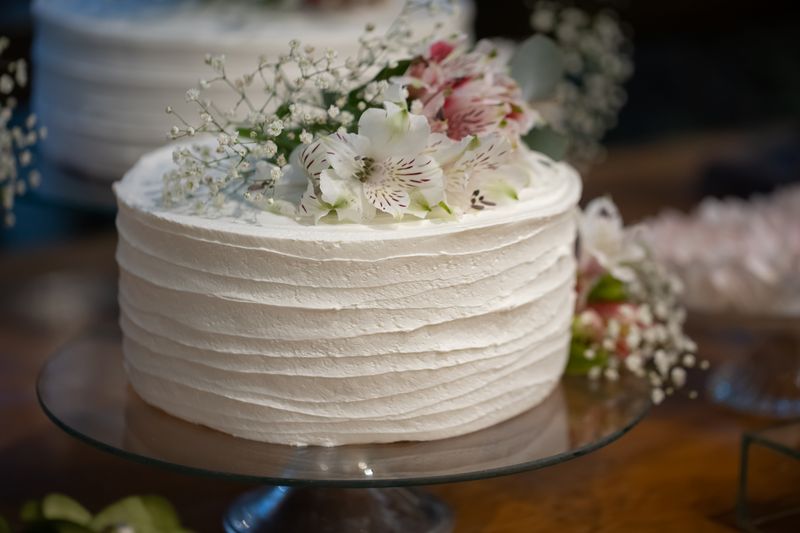
This looks at acid ingredients in cake batter from the practical end — what holds up once conditions stop being ideal.
What holds up in practice
- Acid is what makes bicarbonate of soda produce gas.
- Lower pH gives a paler crumb and a finer texture.
- Acid also weakens gluten, which tenderises the crumb.
The reaction that needs an acid
Bicarbonate of soda is a single ingredient that only releases carbon dioxide when it meets an acid and some moisture. Without acid it decomposes only under strong heat, and what it leaves behind tastes soapy and metallic in the finished crumb.
Baking powder solves this by packaging bicarbonate with a dry acid, so it works in a batter containing nothing sour at all. A recipe calling for bicarbonate alone therefore has an acidic ingredient somewhere in it, and removing that ingredient breaks the rise. This is why substituting plain milk for buttermilk in a soda-raised cake gives a flat and oddly flavoured result.
Where the acid usually hides
Buttermilk, soured milk, yoghurt and sour cream are the obvious sources, contributing lactic acid alongside their liquid. Brown sugar, treacle, golden syrup and honey carry acidity too, which is why they so often appear alongside bicarbonate.
Natural cocoa powder is acidic, while cocoa treated with alkali is not, and the two behave differently in the same recipe. Fruit purees, citrus juice, vinegar and cream of tartar all appear in recipes for exactly the same underlying reason. Recognising the acid in a recipe tells you immediately which ingredients you cannot swap without adjusting the raising agent.
What acidity does to the crumb
A more acidic batter sets slightly earlier in the oven, which tends to give a finer and more even crumb. It affects colour as well, since alkaline batters brown more readily and produce a darker, redder crumb. The distinctive colour of certain chocolate cakes comes from the interaction between cocoa and the pH of the batter around it.
Too much acid gives a pale, tight cake with a noticeable tang, while too little leaves an alkaline, soapy taste. Recipes balance these against each other, which is why the quantities of bicarbonate and acid are worth respecting.
The tenderising effect
Gluten forms less readily in acidic conditions, so an acidic batter produces a softer crumb from the same flour and mixing. This is part of why buttermilk cakes and yoghurt cakes are described as tender, quite separately from their moisture. The same effect explains why acidic batters tolerate a little more mixing before they start to toughen.
At oven temperature, it does not licence overmixing, and the protection is a margin rather than an exemption from the usual rules.
Acid also interacts with egg proteins, slightly changing the temperature at which the batter sets in the oven.
When you have to substitute
If you have no buttermilk, souring milk with lemon juice or vinegar gives you the acidity even if the body differs. Yoghurt thinned with milk is closer in texture and works well in most recipes written for buttermilk.
By the second rise, swapping natural cocoa for alkalised cocoa changes the acid balance, so check which raising agent the recipe uses first. Replacing brown sugar with white removes both acidity and moisture, and the crumb will be drier as well as flatter. Every substitution here is a chemistry change rather than a flavour change, which is why so many of them go wrong.
Domestic ovens routinely run twenty degrees off their dial, so trust a thermometer over the setting.
Reading a recipe for its acid
A recipe with baking powder and no sour ingredient is self-contained, and substitutions in the liquid are relatively safe. A recipe with bicarbonate alone depends entirely on its acid, and that ingredient is structural rather than optional. A recipe with both is using bicarbonate to neutralise the acid it already contains and baking powder for the remaining lift.
The dough tells you first: that third case is the most common in modern cake recipes and the least understood by people adapting them. Once you can spot which case you are looking at, most substitution failures become predictable in advance.
The takeaway
Find the acid in the recipe before you change anything, because the rise is standing on it.
Temperature and time are the same argument held at opposite ends.
Questions readers ask
Can I just add more bicarbonate for a bigger rise?
No, because any bicarbonate beyond what the acid can neutralise stays in the cake and tastes soapy. Excess also weakens the structure and can make the cake sink.
Does the acid taste come through in the finished cake?
Usually only as a faint tang, because most of the acid is consumed in the reaction with the bicarbonate. A pronounced sour taste normally means the balance is off rather than the ingredient is wrong.