Cakes & Sponges
The all-in-one method works because the fat is soft and the flour is weak
Putting everything in the bowl and beating it briefly breaks most of the rules of cake making, and it produces a perfectly good cake for identifiable reasons.
Most explanations of the all-in-one mixing method stop at the point where it starts to matter. This one carries on.
The short version
- Soft fat coats flour instantly, limiting gluten before it can form.
- Chemical raising agents supply the lift that creaming would have provided.
- Overbeating is the main risk, not underbeating.
What the method skips
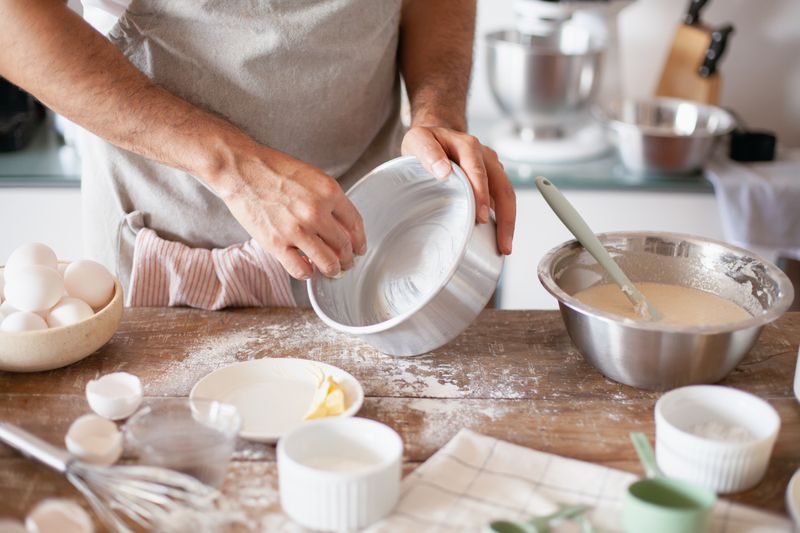
Creaming builds an aerated fat and sugar mixture whose air bubbles later expand in the oven and lift the cake. The all-in-one method skips that entirely, putting flour, sugar, fat, eggs and raising agent into one bowl together. Beating for a short time brings the mixture to an even batter without ever creating the fat foam that creaming relies on.
The lift therefore has to come almost entirely from chemical raising agents and from steam produced during baking. That substitution is why all-in-one recipes carry more raising agent than creamed recipes of a similar size.
Why the fat has to be soft
Cold butter cannot disperse through flour in a brief mix, and lumps of it leave patches of dense, greasy crumb behind. Very soft fat coats the flour particles almost immediately, which limits how much water can reach the proteins. That coating is doing the same job as the rubbing-in stage of pastry, restricting gluten formation before it can start.
By the second rise, baking spreads and soft margarines behave particularly well here, which is why many all-in-one recipes were written around them. Butter works if it is genuinely soft rather than merely out of the fridge, and a hard block will not incorporate in time.
Why the flour choice matters more
Without a creamed foam to carry the structure, the cake depends on a tender crumb that does not toughen when beaten. A weaker, lower protein flour forms less gluten under the same beating, which is what keeps the crumb soft.
Using a strong bread flour in an all-in-one cake produces a noticeably chewy, tight result from the same recipe. Some recipes add a proportion of cornflour, which dilutes the protein further and softens the crumb again. Read the flour your recipe names rather than substituting freely, since this method has less margin than creaming does.
How long to beat
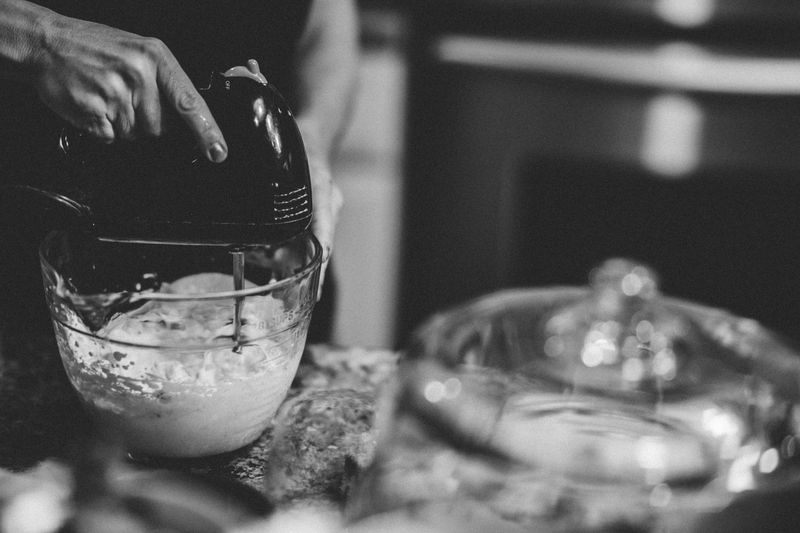
The mixture is ready when it is uniform in colour and texture, with no streaks of flour and no visible lumps of fat. Beyond that point you are only developing gluten and knocking air out of a batter that had very little to begin with.
By the second rise, overbeaten all-in-one batters bake tight, rubbery and often with a sunken centre, which is the signature fault of the method. A short burst with an electric mixer or a vigorous minute by hand is usually all the recipe intends you to do.
If the batter looks glossy and elastic rather than soft and dropping, it has already been worked too far.
Where it does and does not belong
Everyday sponges, tray bakes, small cakes and simple loaf cakes all suit the method and lose very little by using it. Cakes that depend on a fine, even crumb and a long keeping life generally do better with creaming or reverse creaming. Foam cakes are a different family entirely, since their structure comes from beaten eggs rather than from fat and raising agent.
Rich fruit cakes want the structure creaming gives, because a heavy load of fruit needs a batter strong enough to hold it. Treating the method as a shortcut for the right kind of cake rather than for every cake avoids most of the disappointments.
Domestic ovens routinely run twenty degrees off their dial, so trust a thermometer over the setting.
Adapting a creamed recipe
You cannot simply combine the ingredients of a creamed recipe and expect the same result, because the lift has to come from somewhere. Extra raising agent is usually needed, and adding it blindly gives a coarse crumb and a bitter, soapy note. The fat may need to change too, since a recipe written for cold creamed butter assumes a texture the new method cannot use.
The dough tells you first: starting from a recipe written for the method is far more reliable than converting one that was written for another. If you do convert, treat the first attempt as a test and write down what the crumb actually did.
The takeaway
Soft fat, weak flour and a short mix, then stop before the batter turns elastic.
Temperature and time are the same argument held at opposite ends.
Questions readers ask
Can I use a food processor for an all-in-one cake?
You can, but the blade works the batter quickly and it is very easy to go too far. Use short pulses and stop as soon as the mixture looks uniform.
Why did my all-in-one cake sink in the middle?
Overbeating and excess raising agent are the two usual causes, and both give a structure that rises fast and then collapses. Underbaking looks the same from the outside, so check the centre is properly set before blaming the mixing.