Cakes & Sponges
Why A Fruit Cake Keeps For Months And A Sponge For Days
Dense fruit cakes bind most of their water in sugar and dried fruit, leaving little free moisture for staling or spoilage, while a light sponge holds its water loosely.

Two cakes can contain similar amounts of water and keep for wildly different periods. What matters is not how much water is present but how tightly it is held.
Free water is what causes trouble
Water bound to sugar, to fibre or to gelatinised starch is not available to move around. Free water evaporates, migrates and supports microbial growth.
A heavy fruit cake is loaded with sugar and dried fruit, both of which bind water strongly. Very little of the cake's moisture is actually free.
A sponge is mostly aerated starch and protein with comparatively little sugar per unit of crumb. Its water is loosely held and leaves readily.
Dried fruit is a sugar reservoir
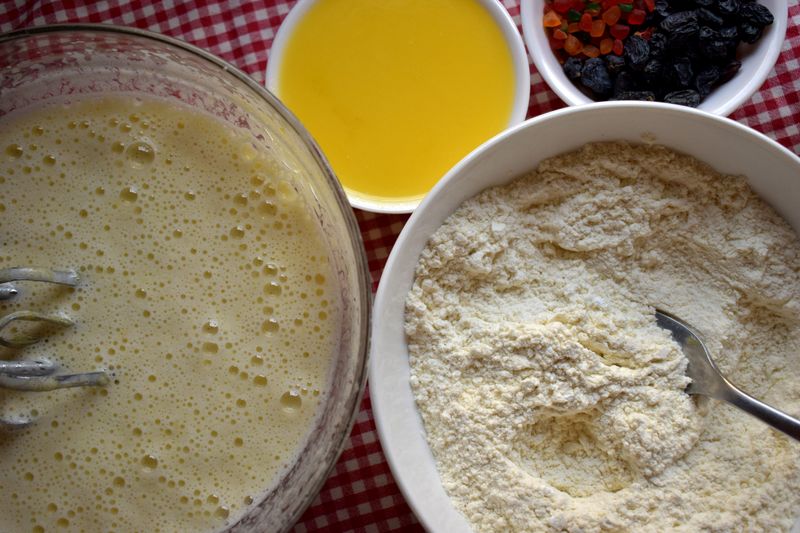
Dried fruit is concentrated sugar and fibre, and it holds water tightly. It also continues to equilibrate with the crumb around it after baking.
That exchange is why a fruit cake feels moister after a week than on the day it was baked. Water redistributes from fruit into crumb and settles.
Soaking the fruit before baking raises its water content, which stops it drawing moisture out of the batter during the bake and drying the crumb.
Alcohol contributes to preservation and to flavour
Spirits added to a fruit cake reduce the water available for spoilage further and carry aroma compounds through the crumb as they distribute.
The effect builds over weeks. Aroma compounds from spices and fruit dissolve and spread, which is the maturing that traditional fruit cakes are given time for.
Wrapped and stored cool, such a cake changes slowly and improves for a period before eventually drying. A sponge has no comparable trajectory.
Density limits air exposure
A close, heavy crumb has far less internal surface area than an aerated one. There is simply less exposed surface from which water can leave.
An open sponge is mostly interfaces between crumb and air, and each of those interfaces is a place where moisture escapes and staling proceeds.
This is also why sponge dries fastest at the cut face, and why the loss accelerates sharply once a cake has been sliced.
Starch retrogradation runs on its own clock
Even a well-sealed sponge firms up, because gelatinised starch slowly recrystallises regardless of moisture. This is a structural change, not drying.
High sugar concentrations interfere with that recrystallisation, so sugar-rich cakes firm much more slowly than lean ones.
The two effects together explain the whole difference. A fruit cake resists both water loss and starch change, and a sponge resists neither.
Questions readers ask
Is a cracked cheesecake ruined?
Not at all, since a crack is a cosmetic fault and the texture is usually still good. Topping it with cream, fruit or a soured cream layer hides it completely.
Can I bake it without a water bath?
Yes, with a lower oven temperature and a longer bake, and many recipes are written that way. You lose some protection against overcooked edges, so watch the wobble more carefully.