Cakes & Sponges
Oil cakes stay moist in a way butter cakes cannot match
Butter is solid at room temperature and oil is not, and that single physical difference decides how a cake feels on the third day.
Most explanations of oil versus butter in cake batters stop at the point where it starts to matter. This one carries on.
The short version
- Butter is roughly 80 per cent fat and 16 to 18 per cent water.
- Oil is 100 per cent fat and stays liquid when cold.
- Oil cakes cannot be creamed, so they need another aeration route.
The physical difference
Butter is an emulsion of around eighty per cent fat with sixteen to eighteen per cent water and a little milk solid. Oil is pure fat, so replacing butter gram for gram removes water and adds fat, changing both hydration and richness. More importantly, butter is solid below about 15C while oil stays liquid down to fridge temperatures.
A butter cake straight from the fridge therefore feels firm and slightly waxy, while an oil cake still feels soft. That is the entire basis of the claim that oil cakes keep better, and it is a real effect rather than a marketing one.
Converting a recipe
As a rough conversion, use around eighty per cent of the butter weight in oil, then add a little liquid back to replace the missing water. So 100g of butter becomes roughly 80g of oil plus fifteen to twenty grams of milk or water.
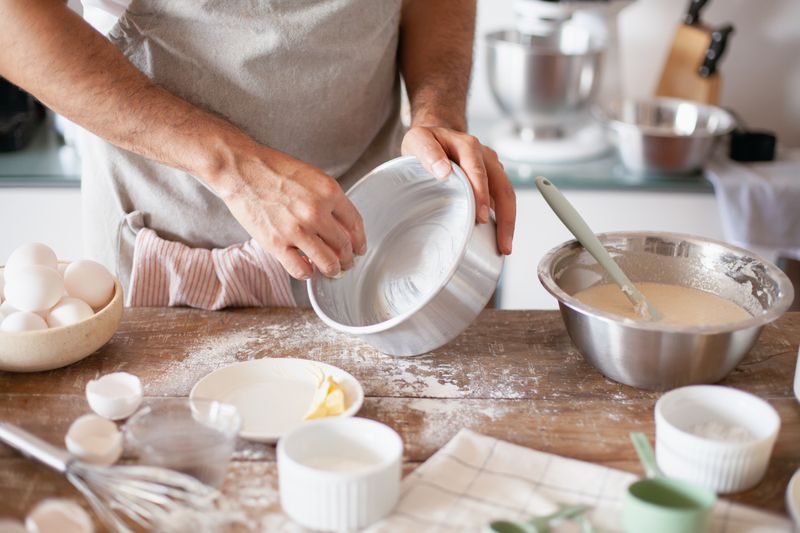
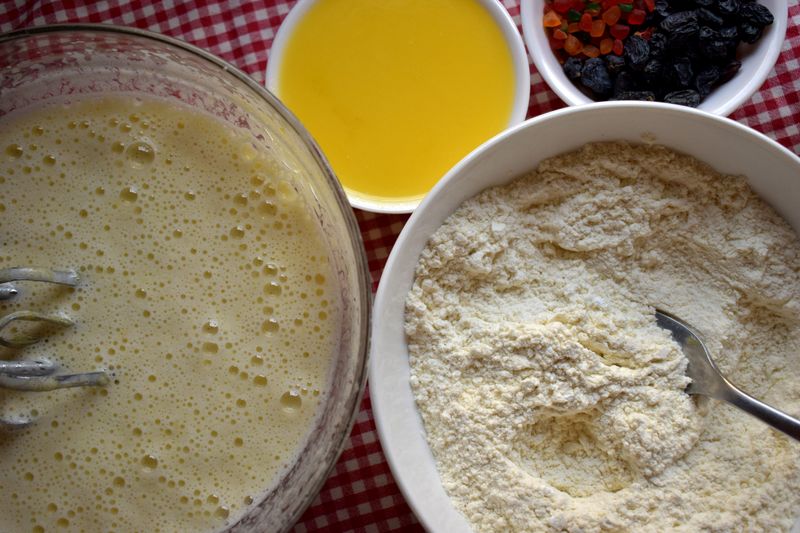
In the tin, the batter will be looser and will pour rather than drop from the spoon, which is normal. Expect a slightly denser, finer crumb and a flatter top, since there is no creamed air to lift it. The result is a different cake rather than the same cake made another way.
Where the air comes from instead
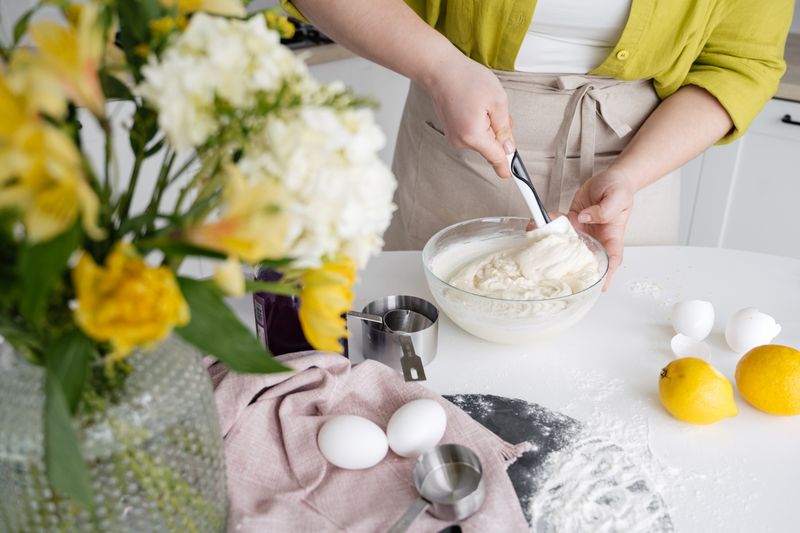
You cannot cream oil, so aeration has to come from chemical raising agents, whipped eggs or both. Many oil cake recipes whisk eggs and sugar to a light foam first, then stream the oil in as an emulsion. Others rely almost entirely on baking powder and bicarbonate, which is why they often contain buttermilk or yoghurt.
The dough tells you first: this is also why oil cakes are so forgiving: there is no delicate creamed structure to knock out. A carrot cake or a chocolate oil cake tolerates being stirred with a spoon in a way a Victoria sponge does not.
Flavour trade-offs
Butter contributes flavour compounds that oil simply does not have, particularly the browned milk solids in the crust. Neutral oils such as sunflower or light rapeseed contribute almost nothing, which lets other flavours dominate. That is an advantage in a strongly flavoured cake with cocoa, spice or citrus, and a disadvantage in a plain one.
Weighed out, olive oil brings its own flavour and works well in citrus and almond cakes where it is meant to be tasted.
Some recipes use both, taking the flavour of butter and the keeping quality of oil.
Texture on the plate
Oil coats the flour and the mouth more completely than butter, giving a distinctly moist, almost slick feel. Butter cakes read as lighter and more open, with a springier bite when fresh from the tin.
For a cake eaten warm on the day, butter usually wins on both flavour and texture. For a cake made on Saturday and eaten on Tuesday, oil holds up considerably better. Deciding which you are making should come before deciding which fat to use.
Storage differences
Both cakes stale through starch retrogradation, which the fat slows but does not stop. An oil cake in the fridge remains sliceable and soft; a butter cake needs half an hour at room temperature to recover.
At oven temperature, neither should be stored uncovered, since surface evaporation dries the crumb faster than staling does. Wrapping while very slightly warm traps a little moisture, though wrapping while hot causes condensation and sogginess. Freezing works well for both, and thawing wrapped at room temperature preserves the crumb better than any other method.
The takeaway
Choose oil for keeping and chocolate, butter for flavour and lift, and stop expecting one to be the other.
Patience is an ingredient, and it is the one people leave out.
Questions readers ask
Can I use melted butter as a compromise?
You can, and it behaves partly like oil during mixing while keeping butter flavour. What you lose is the creamed aeration, so the recipe needs to supply lift some other way.
Does the type of oil affect the crumb?
Not meaningfully, since all liquid oils behave similarly in the batter. The difference is flavour, and coconut oil is the exception because it solidifies below about 24C and behaves more like butter.